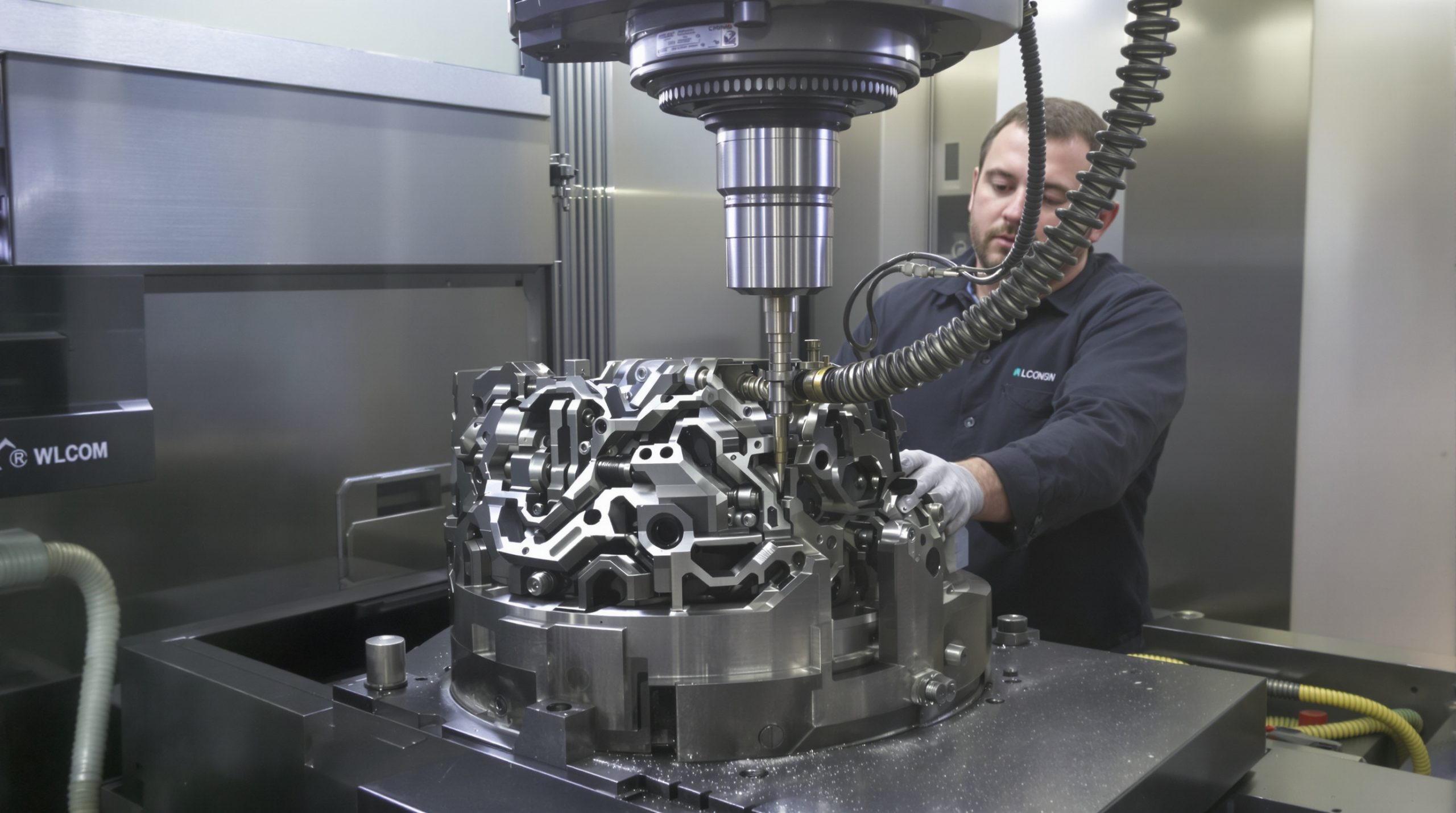
分类: Industry Trends & News

  • What Is 5-Axis CNC Machining and Why It’s Critical for Complex Parts Manufacturing

    What Is 5-Axis CNC Machining and Why It’s Critical for Complex Parts Manufacturing

    Introduction

    As product designs become more complex and tolerances tighter, traditional 3-axis machining often reaches its limits. This is where 5-axis CNC machining becomes essential. By enabling simultaneous movement across five axes, manufacturers can machine complex geometries in a single setup, achieving higher precision, better surface quality, and shorter lead times. For industries such as aerospace, medical devices, energy, and high-end tooling, 5-axis CNC machining is no longer optional—it is critical.

    This article explains what 5-axis CNC machining is, how it works, and why it plays a decisive role in complex parts manufacturing.

    What Is 5-Axis CNC Machining?

    5-axis CNC machining refers to a machining process where cutting tools move along three linear axes (X, Y, Z) and two additional rotational axes (A and B or C). Unlike 3-axis machining, which requires multiple setups to access different faces of a part, 5-axis CNC machining allows continuous tool orientation during cutting.

    There are two common configurations:

    • Table-table (trunnion) type: The workpiece rotates on two axes

    • Head-table or head-head type: The spindle tilts and rotates

    Both configurations enable 5-axis CNC machining to reach deep cavities, undercuts, and complex contours that are difficult or impossible to achieve with conventional methods.

    Why 5-Axis CNC Machining Is Critical for Complex Parts

    1. Single-Setup Machining Improves Accuracy

    Every time a part is re-clamped, small positioning errors are introduced. In complex parts manufacturing, these errors accumulate quickly. 5-axis CNC machining minimizes or eliminates multiple setups, significantly improving dimensional accuracy and positional consistency.

    This is especially critical for:

    • Aerospace structural components

    • Medical implants

    • Precision molds and dies

    2. Ability to Machine Complex Geometries

    Modern designs often include freeform surfaces, deep pockets, and intersecting angles. 5-axis CNC machining allows the cutting tool to maintain optimal contact angles, making it ideal for complex geometries.

    Applications include:

    • Turbine blades and impellers

    • Engine housings

    • Multi-surface precision parts

    Without 5-axis CNC machining, these parts would require multiple fixtures, special tools, or even design compromises.

    3. Superior Surface Finish and Tool Life

    By keeping the tool at the best cutting angle, 5-axis CNC machining reduces vibration and uneven tool engagement. This results in:

    • Better surface finish

    • Reduced tool wear

    • Lower risk of chatter

    In complex parts manufacturing, this translates to less post-processing and more consistent quality.

    4. Higher Efficiency and Shorter Lead Times

    Although 5-axis CNC machining equipment has a higher upfront cost, it often reduces total production time. Fewer setups, faster machining cycles, and reduced manual intervention all contribute to improved efficiency.

    For manufacturers producing high-value complex parts, 5-axis CNC machining delivers a lower total cost of ownership over time.

    Industries That Rely on 5-Axis CNC Machining

    Aerospace

    Aerospace components demand tight tolerances, lightweight structures, and complex shapes. 5-axis CNC machining enables efficient machining of titanium, aluminum, and nickel-based alloys used in aircraft and engines.

    Medical Devices

    Medical implants and surgical tools often feature organic geometries and micron-level tolerances. 5-axis CNC machining ensures precision, repeatability, and excellent surface quality.

    Energy and Power Generation

    Components such as impellers, pump housings, and turbine parts benefit from the flexibility of 5-axis CNC machining, especially when machining hard or heat-resistant materials.

    Mold and Tooling

    Complex molds with deep cavities and multi-angle surfaces are ideally suited for 5-axis CNC machining, reducing EDM and polishing requirements.

    5-Axis CNC Machining vs. 3-Axis Machining

    Aspect 3-Axis Machining 5-Axis CNC Machining
    Setup Count Multiple Single or minimal
    Geometry Capability Limited Highly complex
    Accuracy Setup-dependent High consistency
    Surface Finish Moderate Superior
    Efficiency Lower Higher for complex parts

    For complex parts manufacturing, 5-axis CNC machining clearly provides a technical and economic advantage.

    FAQ

    1. What makes 5-axis CNC machining different from 3-axis machining?

    5-axis CNC machining adds two rotational axes, allowing the tool or workpiece to tilt and rotate. This enables machining of complex shapes in fewer setups with higher accuracy.

    2. Is 5-axis CNC machining only for large companies?

    No. While the machines are more advanced, many small and medium manufacturers adopt 5-axis CNC machining to stay competitive in high-precision and complex parts manufacturing.

    3. What materials are best suited for 5-axis CNC machining?

    Common materials include aluminum alloys, titanium, stainless steel, Inconel, and other advanced engineering materials used in aerospace and medical applications.

    4. Does 5-axis CNC machining reduce overall production cost?

    For complex parts, yes. Fewer setups, less rework, and shorter lead times often make 5-axis CNC machining more cost-effective despite higher initial investment.

    Conclusion

    As product designs evolve toward higher complexity and tighter tolerances, 5-axis CNC machining has become a cornerstone of modern manufacturing. Its ability to deliver accuracy, efficiency, and design freedom makes it critical for complex parts manufacturing across aerospace, medical, energy, and tooling industries.

    For manufacturers aiming to produce high-precision, high-value components, investing in 5-axis CNC machining is not just a technological upgrade—it is a strategic advantage.

  • Cost Breakdown: Is Investing in a 5 Axis CNC Machine Worth It?

    For manufacturers serving aerospace, medical devices, energy, and high-precision engineering, the question is no longer what a 5 axis CNC machine can do—but whether the investment truly delivers measurable returns. With machine prices significantly higher than traditional equipment, understanding the 5 axis CNC machine cost, long-term operating expenses, and real-world ROI is critical before making a purchasing decision.

    This article provides a structured 5 axis CNC machining cost breakdown, examines hidden ownership costs, and explains when a 5 axis CNC machine investment becomes not only justified, but essential.


    Understanding the Initial 5 Axis CNC Machine Cost

    The most visible component of ownership is the upfront purchase price. Depending on configuration, brand, and application focus, the 5 axis CNC machine price typically falls into the following ranges:

    Machine Class Typical Price Range
    Entry-level trunnion type USD 180,000 – 300,000
    Mid-range production 5 axis CNC machine USD 300,000 – 600,000
    High-end aerospace / medical systems USD 600,000 – 1,200,000+

    While this initial 5 axis CNC machine cost may appear steep compared to 3-axis or 4-axis alternatives, purchase price alone does not reflect the full economic picture.


    Tooling, Fixturing, and Setup: Where 5 Axis Saves Money

    One overlooked advantage in any 5 axis CNC machine investment is the dramatic reduction in tooling and fixturing complexity. Because parts can be machined in a single setup:

    • Custom fixtures are reduced by up to 60–70%

    • Manual re-clamping and re-alignment are eliminated

    • Setup time drops by 50–80% for complex parts

    For manufacturers comparing 5 axis CNC vs 3 axis cost, these savings often offset a large portion of the initial price difference within the first year of production.


    Operating Costs: Power, Tool Wear, and Maintenance

    Beyond purchase price, the total cost of ownership CNC machine must include ongoing operating expenses.

    Power and Utilities

    Modern 5 axis systems are more energy-efficient than legacy machines, but higher spindle power and axis motion increase electricity consumption by approximately 10–15% compared to 3-axis machining.

    Tooling and Tool Life

    Advanced tool orientation significantly improves cutting conditions:

    • Tool life increases 20–40% in titanium and Inconel

    • Reduced chatter lowers scrap and rework

    • Adaptive toolpaths minimize edge wear

    This directly lowers the cost of 5 axis CNC machining over sustained production runs.

    Maintenance and Calibration

    Annual maintenance and calibration costs are higher due to:

    • Rotary axis calibration

    • Thermal compensation systems

    • Multi-axis kinematic verification

    However, these systems also reduce geometric drift, protecting tight tolerances and preserving long-term accuracy.


    Labor Efficiency and Automation Advantages

    Labor costs are a decisive factor when evaluating is a 5 axis CNC machine worth it. Single-setup machining allows:

    • Fewer operator interventions

    • Lights-out and unattended machining

    • Faster part qualification and inspection

    Shops integrating automation frequently report 30–50% labor cost reduction per part, especially in aerospace and medical production environments.


    ROI Analysis: When Does a 5 Axis CNC Machine Pay for Itself?

    A realistic 5 axis CNC machine ROI model considers:

    • Setup time reduction

    • Scrap rate reduction (often 25–40%)

    • Increased spindle utilization

    • Expanded part complexity capability

    For manufacturers producing complex geometries, break-even commonly occurs within 18–36 months, depending on part mix and production volume.

    In aerospace and medical device manufacturing, the ROI timeline is often shorter due to:

    • Higher part value

    • Stricter tolerance requirements

    • Reduced compliance risk


    Industry-Specific Value: Aerospace and Medical Manufacturing

    Aerospace Applications

    A 5 axis CNC machine for aerospace manufacturing enables:

    • Monolithic structural components

    • Weight reduction through optimized geometry

    • Consistent fatigue-resistant surface finishes

    These capabilities directly reduce lifecycle costs beyond machining alone.

    Medical Device Production

    A 5 axis CNC machine for medical devices supports:

    • Patient-specific implants

    • Sub-micron surface control

    • Full traceability for regulatory compliance

    In these sectors, the 5 axis CNC machine investment is often a requirement—not an option.


    Hidden Costs Buyers Often Miss

    When evaluating how much does a 5 axis CNC machine cost, buyers frequently underestimate:

    • CAM software and post-processor development

    • Operator training and process validation

    • Metrology upgrades for complex geometry inspection

    Planning for these costs upfront ensures realistic ROI expectations and smoother implementation.


    Conclusion: Is a 5 Axis CNC Machine Worth It?

    For simple prismatic parts, a 3-axis solution may remain sufficient. But for manufacturers facing complex geometry, tight tolerances, and high-value materials, a high precision 5 axis CNC machining system delivers measurable financial and technical advantages.

    When evaluated through total cost of ownership and long-term productivity, the answer to is a 5 axis CNC machine worth it is increasingly clear: for critical manufacturing, it is not an expense—it is a competitive necessity.


    FAQ

    1. Is a 5 axis CNC machine always more expensive to operate?

    Not necessarily. While tooling and maintenance can be higher, reduced setup time, lower scrap rates, and faster production often result in lower overall operating costs.


    2. How long does it take to see ROI on a 5 axis CNC machine?

    ROI timelines vary, but many manufacturers see returns within 1–3 years through labor savings, higher throughput, and access to more complex, higher-margin parts.


    3. Does a 5 axis CNC machine reduce labor costs?

    Yes. Single-setup machining and automation-ready workflows reduce manual repositioning, inspection, and rework, lowering labor dependency.


    4. Which industries benefit most from investing in 5 axis CNC machines?

    Aerospace, medical devices, energy, and precision tooling industries benefit the most due to their tight tolerances, complex geometries, and strict quality requirements.

  • The Future of CNC: How 5 Axis Machines Integrate with Automation and AI

    The future of CNC machining is no longer defined by standalone machine performance. As manufacturing moves toward higher precision, lower batch sizes, and stricter regulatory oversight, 5 axis CNC machining is increasingly integrated with automation and AI to form intelligent, self-optimizing production systems.

    This evolution is not optional. In aerospace, medical, and other critical industries, the combination of 5 axis CNC machines, automation, and AI-driven decision-making is becoming the baseline for competitiveness, quality assurance, and long-term scalability.


    From Isolated Machines to Intelligent Manufacturing Systems

    Traditional CNC machining treated each machine as an independent unit. Operators loaded parts, programs were manually adjusted, and quality feedback arrived only after inspection. This model struggles under today’s requirements for traceability, repeatability, and micron-level consistency.

    Modern 5 axis CNC machining changes this paradigm. By nature, 5 axis CNC machines generate richer datasets: tool orientation vectors, rotary axis loads, thermal behavior, and real-time kinematic feedback. When connected to automation and AI platforms, this data becomes actionable intelligence rather than unused machine logs.

    As a result, automation and AI transform 5 axis CNC machines from cutting tools into adaptive manufacturing nodes.


    Why 5 Axis CNC Machines Are the Foundation of CNC Automation

    Not all CNC platforms integrate with automation equally. 5 axis CNC machines are uniquely suited for automation due to three structural advantages.

    Single-Setup Machining Enables Robotic Consistency

    Automation thrives on repeatability. Multi-setup 3-axis workflows introduce variability at every re-clamping step, making robotic loading and unloading unreliable.

    In contrast, 5 axis CNC machining enables complete part machining in a single setup. This allows automation systems to:

    • Load raw material

    • Execute full machining cycles

    • Unload finished parts
      without manual intervention or re-alignment.

    This single-setup logic is essential for lights-out manufacturing and is one reason 5 axis CNC machines dominate automated aerospace and medical production lines.

    Reduced Fixturing Complexity Improves Automation Reliability

    Automation systems struggle with complex, custom fixturing. Because 5 axis CNC machining provides full access to all part surfaces, fixturing can be simplified and standardized.

    Simpler fixtures mean:

    • Faster robotic changeovers

    • Lower risk of misalignment

    • Higher automation uptime

    This mechanical simplicity is a critical enabler for scalable automation and AI integration.


    AI-Driven Toolpath Optimization in 5 Axis CNC Machining

    One of the most impactful applications of automation and AI is in toolpath optimization for 5 axis CNC machining.

    Adaptive Feed and Speed Control

    AI systems analyze spindle load, vibration signals, and tool wear patterns in real time. Instead of relying on static CAM parameters, AI dynamically adjusts:

    • Feed rates

    • Tool orientation

    • Engagement angles

    In 5 axis CNC machining, where cutting conditions constantly change due to simultaneous rotary motion, this adaptive control significantly improves surface integrity and tool life.

    Predictive Collision Avoidance

    AI-enhanced simulation models continuously compare planned toolpaths with real machine behavior. This reduces collision risk caused by:

    • Axis synchronization errors

    • Thermal drift

    • Unexpected material deformation

    For complex geometries, AI-supported 5 axis CNC machines can detect unsafe motion before it becomes a physical event.


    Automation, AI, and Closed-Loop Quality Control

    Quality control is no longer a downstream process. In advanced CNC environments, automation and AI close the loop between machining and inspection.

    In-Process Measurement and AI Feedback

    Modern 5 axis CNC machines integrate probing systems that measure critical features during machining. AI algorithms evaluate this data instantly and determine whether:

    • Tool offsets need correction

    • Thermal compensation is required

    • Subsequent operations should be adjusted

    This closed-loop approach reduces scrap and ensures dimensional consistency across long production runs.

    Learning from Historical Data

    AI systems continuously learn from past cycles. Over time, automation and AI identify patterns such as:

    • Which toolpaths generate the most stable surfaces

    • How materials respond under different cutting strategies

    • Where dimensional drift typically begins

    These insights directly improve future 5 axis CNC machining programs without human trial-and-error.


    Digital Twins and Smart Factories Built Around 5 Axis CNC Machines

    The concept of the digital twin is central to the future of CNC manufacturing.

    A digital twin is a virtual replica of a physical 5 axis CNC machine, continuously updated with live data. This allows manufacturers to:

    • Simulate process changes before implementation

    • Predict maintenance needs

    • Optimize production schedules

    In smart factories, automation and AI orchestrate multiple 5 axis CNC machines as a unified system rather than isolated assets.

    This system-level optimization is impossible without the rich kinematic and process data generated by 5 axis CNC machining.


    Workforce Evolution: From Operators to System Engineers

    Automation does not eliminate human expertise—it elevates it.

    As automation and AI handle repetitive tasks, skilled personnel shift toward:

    • Process optimization

    • Data analysis

    • Quality strategy development

    Engineers overseeing 5 axis CNC machines increasingly focus on system-level decisions rather than manual adjustments. This transition improves consistency while preserving critical engineering judgment.


    Challenges in Integrating Automation and AI with 5 Axis CNC Machining

    Despite its advantages, integration is not without challenges.

    Common barriers include:

    • Poor data quality from legacy machines

    • Incompatible post-processors

    • Lack of standardized communication protocols

    Successful adoption of automation and AI requires treating 5 axis CNC machining as part of a complete manufacturing ecosystem, not a standalone upgrade.


    The Strategic Future of CNC Manufacturing

    The future of CNC is clear: 5 axis CNC machines, automation, and AI will define the next generation of precision manufacturing.

    Manufacturers who adopt this integrated approach gain:

    • Higher throughput with fewer errors

    • Predictable micron-level quality

    • Scalable production for high-mix, low-volume demand

    Those who delay will find it increasingly difficult to compete in industries where precision, traceability, and reliability are non-negotiable.

    In this future, 5 axis CNC machining is not simply a capability—it is the structural backbone that enables intelligent, automated, and AI-driven manufacturing.


    FAQ

    1. Why are 5 axis CNC machines better suited for automation than 3-axis machines?

    5 axis CNC machines enable complete part machining in a single setup, reducing manual intervention and fixturing complexity. This consistency makes robotic loading, automated workflows, and AI-driven process control far more reliable than with multi-setup 3-axis machining.


    2. How does AI improve accuracy in 5 axis CNC machining?

    AI analyzes real-time data such as spindle load, vibration, and thermal behavior during 5 axis CNC machining. Based on this data, AI dynamically adjusts feed rates, tool orientation, and offsets to maintain stable cutting conditions and micron-level accuracy.


    3. Can existing 5 axis CNC machines be upgraded with automation and AI?

    Many modern 5 axis CNC machines can be retrofitted with automation and AI through software upgrades, sensors, and connectivity modules. However, successful integration depends on machine rigidity, control system openness, and data quality.


    4. What industries benefit most from 5 axis CNC automation and AI integration?

    Industries requiring complex geometry and strict quality control—such as aerospace, medical devices, and energy—gain the most from automation and AI combined with 5 axis CNC machining, as it delivers higher consistency, traceability, and production efficiency.

  • Common Mistakes to Avoid When Programming 5 Axis CNC Machines

    5-axis CNC machining has become indispensable in aerospace, medical, energy, and other high-reliability industries. Its ability to machine complex geometries in a single setup enables tighter tolerances, better surface integrity, and shorter lead times.

    However, the advantages of 5-axis machining are not automatic. Many manufacturers invest in advanced 5-axis equipment but fail to realize its full potential due to programming mistakes that compromise accuracy, surface quality, tool life, and even part safety.

    This article outlines the most common—and most costly—mistakes to avoid when programming 5-axis CNC machines, drawing from real-world aerospace and medical manufacturing experience. Avoiding these pitfalls is essential for achieving micron-level precision, stable repeatability, and predictable ROI.

    1. Treating 5-Axis Programming Like Advanced 3-Axis Machining

    One of the most fundamental mistakes is approaching 5-axis programming as an extension of 3-axis logic.

    In 3-axis workflows, programmers typically:

    • Lock part orientation

    • Rely on multiple setups

    • Accept datum shifts as unavoidable

    In true simultaneous 5-axis machining, this mindset leads to:

    • Over-constrained toolpaths

    • Unnecessary reorientations

    • Missed opportunities for single-setup completion

    5-axis machining is not about more axes—it is about continuous coordination of geometry, tool orientation, and cutting forces.

    When programmers fail to design toolpaths that fully leverage A- and B-axis motion, they often reintroduce the very errors 5-axis machines are meant to eliminate: cumulative tolerance stack-up, inconsistent surface finish, and extended cycle times.

    Best practice:
    Program with a “single-datum, full-contour” strategy from the start. The goal should be complete part accessibility and uninterrupted machining wherever possible.

    2. Ignoring Tool Orientation Optimization and Lead/Lag Angles

    In 5-axis machining, tool orientation is just as critical as tool position.

    A common error is maintaining a fixed tool angle throughout complex surfaces. This can result in:

    • Excessive tool deflection

    • Chatter on thin walls

    • Uneven surface roughness

    • Premature tool wear

    For difficult materials such as titanium or Inconel, improper lead and lag angles significantly increase cutting forces—often beyond what even high-end spindles are designed to handle.

    Why this matters:

    • Tool deflection directly degrades geometric accuracy

    • Surface Ra values increase even when feed rates are reduced

    • Heat concentrates at the cutting edge, accelerating wear

    Best practice:
    Use dynamic tool orientation that continuously adjusts lead/lag angles to maintain optimal engagement. This allows:

    • Shorter, stiffer tools

    • More consistent cutting forces

    • Improved surface finish (often Ra ≤ 0.4 μm without secondary polishing)

    3. Poor Collision Avoidance and Incomplete Machine Simulation

    Many 5-axis crashes happen not on the shop floor, but in the CAM environment—because full kinematic simulation was skipped or oversimplified.

    Common simulation mistakes include:

    • Ignoring spindle nose and toolholder geometry

    • Failing to model rotary axis limits

    • Overlooking cable wrap or axis singularities

    • Assuming CAM defaults are “safe enough”

    In 5-axis machining, even a few degrees of unexpected rotation can cause:

    • Toolholder collisions

    • Axis overtravel alarms

    • Scrapped parts late in the cycle

    Best practice:
    Always use full digital twin simulation, including:

    • Exact machine kinematics

    • Tool, holder, and spindle models

    • Axis limits and safe zones

    This is especially critical in aerospace and medical applications, where a single collision can invalidate an entire batch due to traceability requirements.

    4. Neglecting Datum Strategy and Feature-Based GD&T Logic

    Another costly mistake is programming without a clear datum and GD&T-driven strategy.

    In 5-axis machining, it is tempting to “let the machine handle everything.” However, without a well-defined datum structure:

    • Critical features may drift relative to each other

    • Inspection results become inconsistent

    • Parts may pass CMM checks but fail functional assembly

    This is particularly dangerous for:

    • Aerospace mounting interfaces

    • Medical implant mating surfaces

    • Sealing and load-bearing features

    Best practice:
    Align programming strategy with GD&T intent:

    • Maintain a single primary datum wherever possible

    • Sequence operations to protect critical features

    • Avoid unnecessary reorientation that introduces datum ambiguity

    Precision machining is not just about hitting numbers—it is about maintaining functional relationships between features.

    5. Underestimating Thermal Effects During Long 5-Axis Cycles

    5-axis machining often involves:

    • Longer continuous cycles

    • High spindle loads

    • Multi-surface engagement

    A common programming oversight is ignoring thermal growth of the machine, spindle, and workpiece.

    Even small temperature changes can cause:

    • Micron-level drift over long cycles

    • Surface waviness on large parts

    • Inconsistent results between first-off and last-off parts

    Key reality:
    Steel expands ~10 μm per meter per °C. Without thermal compensation, tight ±2–5 μm tolerances become impossible to maintain.

    Best practice:

    • Use machines with real-time thermal compensation

    • Program probing cycles for in-process verification

    • Balance cutting strategies to avoid localized heat buildup

    Thermal stability must be considered at the programming stage, not corrected after inspection failures.

    6. Overlooking Tool Length, Reach, and Rigidity Tradeoffs

    5-axis machines enable access to deep features—but this often tempts programmers to use long-reach tools unnecessarily.

    The result:

    • Reduced stiffness

    • Amplified vibration

    • Poor surface integrity

    • Higher scrap rates

    In simultaneous 5-axis machining, many features can be accessed with shorter tools simply by reorienting the part, yet this advantage is frequently underused.

    Best practice:

    • Prioritize shortest possible tool length

    • Use machine kinematics to gain access—not tool extension

    • Adjust tool orientation to maintain rigidity

    This approach improves:

    • Surface finish consistency

    • Tool life

    • Dimensional stability across batches

    7. Failing to Align Programming Strategy with Material Behavior

    Different materials respond very differently to 5-axis machining—and ignoring this is a major programming error.

    Examples:

    • Titanium: Sensitive to heat accumulation → requires controlled engagement and adaptive feeds

    • Inconel: Work-hardens rapidly → demands constant cutting conditions and vibration control

    • Medical alloys (Co-Cr, PEEK): Surface integrity is critical → excessive polishing or rework is unacceptable

    Programming without accounting for material physics leads to:

    • Micro-cracks

    • Residual stress

    • Reduced fatigue life

    Best practice:
    Material behavior must influence:

    • Toolpath style

    • Feed and speed modulation

    • Entry and exit strategies

    In critical industries, surface integrity is as important as dimensional accuracy.

    8. Treating Post-Processing as a Final Step Instead of a Core Discipline

    Post-processing errors are a hidden risk in 5-axis machining.

    Generic or poorly tuned post-processors can:

    • Introduce axis reversal errors

    • Misinterpret rotary movements

    • Create unsafe transitions

    These issues often remain invisible until:

    • A collision occurs

    • A tolerance violation appears

    • A machine alarm halts production

    Best practice:

    • Use machine-specific, validated post-processors

    • Regularly verify output against simulation

    • Treat post-processing as part of the machining system—not an afterthought

    Conclusion: 5-Axis Programming Is a System, Not a Shortcut

    5-axis CNC machining delivers unmatched capability—but only when programming, machine dynamics, materials, and quality strategy work together as a system.

    Avoiding these common mistakes enables manufacturers to:

    • Achieve true single-setup accuracy

    • Maintain sub-micron consistency

    • Reduce scrap and rework

    • Meet aerospace and medical regulatory demands with confidence

    In critical component manufacturing, programming discipline is as important as machine capability.


    FAQ

    1. What are the most common mistakes in 5-axis CNC programming?

    The most common mistakes include treating 5-axis machining like advanced 3-axis work, failing to optimize tool orientation, skipping full machine simulation, neglecting datum strategy, ignoring thermal effects, and using generic post-processors. These errors often lead to tolerance drift, poor surface finish, tool collisions, and inconsistent part quality—especially in aerospace and medical applications.


    2. Why can’t 5-axis CNC machines be programmed like 3-axis machines?

    Because 5-axis CNC machining relies on continuous coordination of linear and rotary axes, not fixed orientations. Programming with a 3-axis mindset introduces unnecessary re-setups, suboptimal tool angles, and cumulative datum errors—negating the primary advantages of 5-axis machining such as single-setup accuracy and surface integrity.


    3. How does improper tool orientation affect 5-axis machining accuracy?

    Incorrect lead and lag angles increase tool deflection, vibration, and uneven cutting forces. This directly degrades geometric accuracy and surface finish, particularly when machining titanium, Inconel, or thin-walled structures. Proper tool orientation allows shorter tools, better rigidity, and more stable micron-level results.


    4. Is full machine simulation really necessary for 5-axis CNC programming?

    Yes. Full kinematic simulation—including spindle, toolholder, rotary limits, and axis singularities—is essential. Many 5-axis failures occur due to incomplete simulation rather than machine capability. In regulated industries, a single collision can invalidate parts due to traceability and quality compliance requirements.

  • How the G300 Machine Achieves Micron-Level Precision in High-End Machining Applications

    The G300 precision machining center is designed G300 machine parts to meet these requirements. It combines a rigid mechanical structure, a high-performance motion control system, and a precision-oriented process design, enabling the G300 to achieve stable and repeatable micron-level machining accuracy, even for complex and high-precision parts.

    This article explains how the G300 achieves micro-level precision, the key technical advantages behind its performance, and how engineering drawings are used to validate real-world machining capability.Precision machining starts with mechanical stability. The G300 features a high-rigidity machine structure designed to minimize vibration and deformation during cutting.The G300 employs a high-precision motion transmission system, ensuring accurate and repeatable axis movement.

    The DEPU G300 Cradle Type Five-Axis Vertical Machining Center is engineered to achieve micron-level precision in demanding high-end machining applications. Through its gantry-type symmetrical structure, high-performance DD cradle rotary table, precision ball screws, and full closed-loop control system, the G300 ensures exceptional rigidity, stability, and accuracy. This article explores the key technologies and design features that enable the G300 to meet the stringent requirements of industries such as aerospace, automotive, and medical equipment manufacturing.

    1. Advanced Structural Design for Unmatched Rigidity

    The G300 features a gantry-type symmetrical structure, constructed from high-quality cast iron that undergoes dual heat treatments to eliminate residual stress. This design ensures exceptional mechanical stability and minimizes deformation during high-speed cutting operations. The result is a machine capable of maintaining micron-level accuracy even under heavy loads and dynamic conditions.

    2. High-Performance DD Cradle Rotary Table

    At the heart of the G300’s precision is its direct-drive (DD) cradle rotary table, equipped with YRT bearings for superior load-bearing capacity and rotational accuracy. Paired with HEIDENHAIN position feedback devices, the table enables precise angular positioning and smooth motion, critical for complex five-axis machining tasks.

    3. Precision Motion Control with Full Closed-Loop Feedback

    Every axis of the G300 is fitted with high-precision NSK/THK ball screws and HEIDENHAIN linear encoders, ensuring accurate linear motion and real-time position correction. The full closed-loop control system continuously monitors and adjusts the machine’s movements, guaranteeing long-term accuracy and repeatability.

    4. Customizable High-Speed Spindle Options

    The G300 offers a range of high-performance electric spindles with speeds up to 24,000 RPM and torque options up to 123.4 N.m. This flexibility allows manufacturers to tailor the machine to specific materials and applications, from aluminum to hardened steels, without compromising precision.

    5. Multi-Specification Tool Magazine for Versatility

    With optional 24T, 32T, 40T, or 60T tool magazines, the G300 supports diverse machining operations without frequent manual tool changes. This enhances productivity while maintaining the precision required for intricate parts.

    6. Application-Ready for High-End Industries

    The G300 milling machine is designed to excel in sectors where precision is non-negotiable:

    • Aerospace: Machining turbine blades, structural components, and landing gear parts.

    • Automotive: Producing molds, prototypes, and high-performance engine components.

    • Medical: Crafting implants, surgical instruments, and diagnostic device parts.


  • Top 5 Industries Using 5-Axis Milling in 2025 [ROI Data]

    Aerospace: Precision, Complexity, and Lightweight Integration with 5 Axis Milling Technology

    Why 5 Axis Milling Technology Enables Single-Setup Machining of Titanium Airframes

    Working with titanium airframes requires really tight precision, particularly for those thin walled parts with complex curves. When there are alignment issues from having to set up multiple times, it can actually cause geometry problems growing by around 30%. The 5 axis milling tech solves this problem because it moves both rotationally (A/B/C axes) and linearly (X/Y/Z axes) at the same time. This means the cutting tool stays engaged continuously at just the right angle throughout the process. Maintaining steady chip removal helps prevent work hardening, something super important when dealing with titanium since its surface gets damaged easily if cuts get interrupted. Skilled machinists now hit about plus or minus 0.025mm accuracy on complicated rib structures all in one go, skipping the need for those 4 to 6 separate setups that used to be standard practice. This method tackles head on the difficulties caused by titanium’s poor heat transfer properties and its tendency to react chemically while being machined. According to industry reports, shops that switch to this system see their scrap rates drop by roughly 18%.

    Case Study: 42% Cycle Time Reduction in Boeing 787 Wing Fitting Production

    An unnamed major player in the aerospace industry recently implemented advanced 5-axis milling technology to produce aluminum wing fittings for the Boeing 787 aircraft. These sizable 0.8 meter parts come with challenging features including deep pockets, angled mounting areas, and strict flatness specifications. Before this change, manufacturing these components involved no fewer than 11 separate operations spread across three different machines. Thanks to improvements in tool path programming and adjustments made during actual machining, everything can now be done in a single continuous run. Production times have been cut down significantly – we’re talking about reducing cycle time by around 42% when looking at figures going from 37 hours down to just over 21 hours per part. Material waste has also decreased thanks to better rough cutting techniques, saving about 15% on raw materials. After processing, quality checks showed that surface flatness remained within acceptable limits, staying below 8 microns deviation. Given how critical weight reduction is for wings (remember, each gram saved means less fuel burned), this kind of consolidation makes a real difference both operationally and environmentally speaking.

    Medical Devices: Patient-Specific Implants and Micro-Accuracy Demands Met by 5 Axis Milling Technology

    How 5 Axis Milling Technology Achieves Sub-50 µm Surface Finishes on Titanium Spinal Cages

    For titanium spinal cages, meeting strict biocompatibility standards is essential. The surface finish needs to be under 50 microns to stop bacteria from sticking and help with bone integration. With 5 axis milling tech, we can get those sub 50 micron finishes because the machine keeps the tool at the right angle relative to the workpiece even on complex, body-shaped geometries. The synchronized rotation of axes gives us positioning accuracy down to less than 0.005 mm without needing to manually adjust positions. This cuts down on vibrations that might otherwise create surface flaws. Our computer aided manufacturing systems automatically adjust cutting speeds and feeds to maintain around 0.4 microns Ra roughness, which meets ISO 13485 requirements for medical devices. Since we do both roughing and finishing in one setup, there’s no need for separate polishing steps that could introduce contaminants. Production times drop by about 35% this way. Plus, when making custom implants for patients, the final product matches those detailed CT or MRI scans much better, giving surgeons what they actually need during operations.

    Defense & Advanced Machinery: High-Tolerance, Classified, and Dual-Use Applications of 5 Axis Milling Technology

    Securing Supply Chains Through Integrated 5 Axis Milling Technology for Weapon Systems

    Modern weapon systems depend on tough, intricate parts like guidance housings and armor components that need precision down to the micron level and strict secrecy around their designs. The old way of making these parts through multiple machining stages creates problems in the supply chain because it involves so many outside vendors and lots of moving parts literally. With 5 Axis Milling Technology, manufacturers can produce sensitive components from start to finish in one setup, cutting reliance on outside suppliers by roughly 40%, according to recent defense manufacturing reports. When working with tough materials such as chromium nickel steels, doing everything in a single operation means no more adding up small alignment mistakes over time, which helps maintain consistent quality across batches. For defense companies operating in politically unstable regions, this all-in-one approach keeps production going smoothly even when things get tense internationally, ensuring that important military equipment stays ready without risking valuable trade secrets or losing track of where parts came from.

    Cross-Industry Transfer: UAV Development Accelerating 5 Axis Milling Technology Adoption in Industrial OEMs

    Innovation around unmanned aerial vehicles is really pushing forward what’s possible with 5 axis milling technology. We’re seeing major improvements in how we create lighter but stronger structures, integrate internal cooling channels, and achieve those super fast contour cuts. Manufacturers of industrial equipment have started jumping on board for their heavy machinery needs. A company making hydraulic valves cut down production time by almost half when they applied UAV-inspired toolpaths, hitting tolerances under 5 microns that used to be exclusive to aerospace work. This trend isn’t stopping there either. Motor housings, turbine impellers, and even complex gear systems can now be manufactured in one setup instead of multiple stages, which boosts both thermal resistance and mechanical strength. With better batteries giving UAVs more power density, this research collaboration keeps getting stronger. Factories report cutting cycle times by 30% for big parts, something that’s helping keep American manufacturing competitive in areas where military and commercial applications overlap.

    Energy Sector: Turbine Maintenance, Hybrid Manufacturing, and Downtime Reduction via 5 Axis Milling Technology

    In the energy field, 5 axis milling tech is helping tackle those annoying problems we all know too well: long periods when turbines aren’t running and expensive part replacements. This technology can create these special corrosion resistant parts like pump impellers, wind turbine hubs, and even gas turbine blades that have those complicated internal channels and smooth aerodynamic surfaces. The result? Better fluid movement and improved heat management across the board. There’s this new hybrid approach now where they mix additive manufacturing with traditional 5 axis milling techniques. What does that mean practically? Well, it allows repairs right on site for those really valuable components, which cuts down replacement costs somewhere around 60%. Think about what happens during unexpected shutdowns, particularly at those hard to reach offshore locations. That’s when the single setup feature really shines. Parts get made much quicker, and every hour saved from being offline means roughly $88k in savings according to the Energy Infrastructure Council back in 2023. Plants benefit because they don’t need all those extra steps with fixtures or moving things manually between operations. They get back online fast while still hitting those super tight tolerances below 0.01 mm that matter so much for systems under pressure.

    Application Benefit Operational Impact
    Turbine blade refurbishment Reduced material waste 40% faster maintenance cycles
    Valve body machining Unified complex geometry production Eliminates 3+ traditional setups
    Heat exchanger components Optimized thermal transfer surfaces 15% efficiency gain in systems

    Frequently Asked Questions

    What is 5 Axis Milling Technology?

    5 Axis Milling Technology allows a cutting tool to move in five different directions simultaneously—three linear and two rotational axes—enabling complex geometries to be machined in a single setup without multiple adjustments.

    How does 5 Axis Milling Technology benefit titanium machining?

    In titanium machining, 5 Axis Milling Technology minimizes alignment issues and ensures continuous engagement of the cutting tool to prevent work hardening, which ultimately enhances precision and reduces scrap rates.

    What industries benefit from 5 Axis Milling Technology?

    Industries like aerospace, medical devices, defense, industrial OEMs, and energy sectors benefit from 5 Axis Milling Technology in terms of greater precision, reduced cycle times, and improved material savings.

    Why is single-setup machining advantageous?

    Single-setup machining is advantageous because it reduces the need for multiple stage setups, minimizing discrepancies and alignment errors, ensuring higher precision, and lowering production costs.

  • What Makes 5 Axis Milling the Future of High-Precision Manufacturing?

    The Core Technical Advantage: Simultaneous 5-Axis Motion and Sub-Micron Precision

    How Real-Time Coordination of X, Y, Z, A, and B Axes Enables Consistent Sub-0.5 µm Tolerances

    Real 5-axis milling gets down to sub-micron precision by moving all five axes together in real time X, Y, Z for linear movement and A, B for rotation. The way these movements coordinate keeps the cutting tool properly positioned against complex shapes, which stops those annoying tolerance issues that happen when parts have to be repositioned multiple times. Modern CNC machines actually tweak the tool path in tiny steps measured in microns, so the cutter stays perpendicular to whatever it’s working on even when dealing with really deep curves or undercut areas that would trip up simpler systems. Because of this level of control, manufacturers can machine tough materials like hardened aerospace metals and medical grade components with consistent accuracy below 0.5 microns. This kind of performance meets the standards set out in ASME B5.54 tests, though most shops just call it “good enough” when they see those numbers on their quality reports.

    Simultaneous vs. 3+2-Axis: When True 5-Axis Milling Eliminates Re-Setup Errors and Tool Deflection

    Traditional 3+2 axis machining keeps those rotational axes locked while cutting happens, whereas simultaneous 5 axis movement actually does complete contouring all in one go. No need to re-clamp parts between operations, something that causes about 62 percent of positioning errors according to this report from Ponemon Institute back in 2023 called the Precision Manufacturing Benchmark Study. Another big plus is reduced tool deflection because the machine maintains better cutting angles throughout the process. This matters a lot when working with tough materials such as titanium or Inconel where cutting forces often hit around 40 kilonewtons or more. Manufacturers dealing with these demanding applications really benefit from the stability and precision that comes with continuous five axis operation.

    Precision Factor Simultaneous 5-Axis 3+2 Axis Machining
    Positional Error <0.5 µm Up to 1.3 µm
    Setup-Induced Variability Eliminated (single setup) 62% higher (Ponemon 2023)
    Tool Deflection Impact Compensated in real-time Amplifies surface roughness
    Complex Contour Capability Full access without interference Limited by fixed angles

    Single-Setup Efficiency: Eliminating Datum Shifts and Cumulative Error in High-Precision Parts

    Quantifying Accuracy Gains: Up to 62% Reduction in Positional Error vs. Multi-Setup 3-Axis Workflows

    When using multi setup 3 axis machining, there are inevitable datum shifts every time the part gets re fixedtured. These small misalignments build up over multiple operations and end up causing major problems. According to recent industry standards from ASME B5.54 published last year, these accumulated errors account for more than 60 percent of all dimensional issues in precision parts. The solution comes with simultaneous 5 axis milling which keeps the same reference point for the whole manufacturing process, completely eliminating this particular problem. Aerospace companies at the top tier have tested this approach and found that positional errors drop by around 62% compared to traditional methods. Take turbine mounting surfaces for instance they consistently hit below 3 microns in positional accuracy. This level of precision ensures proper thermal contact between components and maintains structural strength even when subjected to extreme operating conditions over time.

    Surface Finish Optimization: RA Improvement from 0.8 µm to 0.2 µm in Hardened Titanium and Inconel

    In multi-axis setups, compromised tool approach angles increase vibration, chatter, and uneven material removal—degrading surface integrity. Simultaneous 5-axis milling preserves ideal tool engagement geometry across complex surfaces, minimizing deflection and maximizing consistency. Measured results show dramatic improvements:

    Material 3-Axis Avg. RA 5-Axis Avg. RA Improvement
    Hardened Titanium 0.8 µm 0.2 µm 75%
    Inconel 718 0.8 µm 0.25 µm 69%

    This enhanced surface finish directly supports clinical performance: Ra ≤ 0.25 µm reduces bacterial adhesion on orthopedic implants and improves osseointegration. Eliminating secondary polishing not only preserves sterility-critical surface integrity but also lowers total production cost by 18%, per peer-reviewed findings in the Journal of Biomedical Manufacturing (2023).

    Strategic Application Fit: Where 5-Axis Milling Delivers Unmatched ROI in Critical Industries

    Aerospace: Turbine Blades and Blisks — 47% Faster Cycle Times and Zero Interference Risk

    When working on turbine blades, blisks, and similar aerodynamic parts, 5 axis milling brings some serious improvements both in how fast things get done and how accurate the final shapes are. Being able to machine those complicated airfoil shapes along with their root connections all in one go cuts down on tool collisions and saves about half the time compared to older multi axis methods. What really matters though is maintaining those tight tolerances below 5 microns when cutting through tough materials like titanium and nickel based superalloys without having to constantly readjust fixtures. This meets all the necessary FAA and EASA standards for parts that actually matter in flight safety. Plus, the built in CAM systems help control vibrations during machining, so surfaces stay smooth even on those delicate thin walled sections needed for engine casings and compressor stages throughout production runs.

    Medical: Complex Lattice Implants with ±2 µm Geometric Tolerances and Biocompatible Surface Integrity

    When making implants for bones and facial structures, getting the details right at a microscopic level matters a lot, particularly when dealing with those intricate lattice designs meant to encourage new bone growth. The simultaneous 5 axis milling process can hit around plus or minus 2 micrometers in terms of shape accuracy while producing surface finishes as smooth as 0.2 micrometers on materials like cobalt chrome and PEEK. And here’s something interesting nobody talks about much these days – we don’t need any extra polishing steps after machining because that tends to mess with the material structure or introduce contaminants. These processes meet all the necessary standards including ISO 13485:2016 requirements and are fully compliant with FDA regulations found in 21 CFR Part 820. From what doctors report back, patients experience roughly a third fewer implant rejections compared to traditional methods. Plus manufacturers can now customize things like spinal cages and cranial plates much faster than before. What used to take weeks now gets done within days, which makes a world of difference when someone needs surgery sooner rather than later.

    FAQ

    What is simultaneous 5-axis motion and how does it differ from 3+2-axis machining?

    Simultaneous 5-axis motion involves the real-time coordination of all five axes—X, Y, Z for linear movements and A, B for rotation—allowing continuous contouring without interruptions. Unlike 3+2 axis machining where rotational axes are locked, simultaneous 5-axis operation eliminates re-setup errors and reduces tool deflection, improving positional accuracy and surface finish.

    How does 5-axis milling enhance precision and eliminate datum shifts?

    5-axis milling maintains the same reference point throughout the entire manufacturing process, eliminating datum shifts and cumulative errors that commonly occur in multi-setup 3-axis machining. This leads to improved positional accuracy and a reduction in dimensional issues, as evidenced by tests in aerospace applications.

    What industries benefit most from simultaneous 5-axis milling?

    Aerospace and medical industries greatly benefit from simultaneous 5-axis milling. In aerospace, it allows faster cycle times and maintains tight tolerances for parts crucial to flight safety. In medical applications, the process ensures precise geometric tolerances and biocompatible surfaces, significantly reducing implant rejection rates.

  • Why Precision Machining Is Essential for Aerospace & Medical Components

    The Non-Negotiable Role of 5-Axis CNC Machining in Critical Component Manufacturing

    How 5-Axis CNC Machining Enables Single-Setup Complexity for Aerospace Structures and Implants

    The 5 axis CNC machining process has really changed how we approach manufacturing these days, especially when it comes to making those complicated parts like aerospace brackets and medical implants all in one go. No more messing around with manual adjustments which can throw off measurements over time. This means parts made from tough materials like titanium for airplanes stay dimensionally stable, and the same goes for those cobalt chromium joints people need replaced. Take turbine blades as an example. Manufacturers report cutting down their weight by around 35 to 37 percent while still keeping everything strong enough. That kind of performance just wasn’t possible back when everyone was stuck using old school 3 axis machines. And let’s not forget about medical devices either. When hospitals need urgent shipments of implant parts, this single fixture approach speeds things up by roughly two thirds compared to older methods, all while maintaining that crucial level of accuracy doctors demand.

    Tolerance Integrity and Surface Finish: Why ±0.0005″ and <0.4 µm Ra Are Standard, Not Optional

    In aerospace and medical manufacturing, component failure is catastrophic. 5-axis CNC machining delivers non-negotiable tolerances of ±0.0005″ and surface finishes under 0.4 µm Ra through continuous, multi-directional toolpath control. This level of precision prevents micro-fractures in load-bearing implants and eliminates aerodynamic turbulence in flight-critical parts. Industry benchmarks illustrate the gap:

    Parameter 3-Axis Machining 5-Axis CNC Machining
    Geometric Tolerance ±0.005″ ±0.0005″
    Surface Roughness (Ra) 1.6–3.2 µm <0.4 µm
    Primary Error Source Fixture repositioning Machine calibration

    Such exactness meets FDA 21 CFR Part 820 requirements for implant biocompatibility and FAA fatigue-resistance standards. Adaptive toolpaths dynamically compensate for material stress during Inconel machining, maintaining micron-level accuracy across full production runs.

    Aerospace Reliability: From Flight-Critical Parts to Zero-Failure Performance

    Case Study: Titanium Landing Gear Brackets — 37% Weight Reduction and 12 Million Safe Flight Hours

    Advanced 5-axis CNC machining enabled a 37% weight reduction in titanium landing gear brackets—without compromising structural integrity—validated by 12 million cumulative flight hours without failure. This outcome stems directly from single-setup processing, which eliminates alignment errors inherent in multi-stage fixturing of complex geometries.

    In aerospace manufacturing, there’s simply no room for mistakes. Each bracket gets checked thoroughly with ultrasonic scans and strain gauge tests to meet those tough AS9100 requirements for how well it can handle repeated stress over time. The production process keeps track of quality metrics too, aiming for a capability index above 1.67 so parts perform reliably even when subjected to intense forces equivalent to nine times gravity. When working with titanium alloys, careful temperature control during machining helps avoid tiny cracks forming in the material. After everything is done, detailed inspections show surface roughness measurements coming in under 0.4 microns Ra, which actually beats what most aviation specs call for these days.

    Key Outcomes

    • Weight reduction: 37% (vs. legacy steel designs)
    • Fatigue life: 3× industry standard
    • Maintenance interval: Extended by 200%
    • Failure rate: 0 incidents across deployment

    The results underscore a fundamental truth: in aerospace engineering, manufacturing precision directly correlates with operational safety—and this methodology now informs next-generation aircraft design where weight savings and failure prevention are non-negotiable.

    Medical Device Safety: Biocompatibility, Traceability, and Regulatory Compliance Through Precision

    Meeting FDA 21 CFR Part 820 and ISO 13485 with Fully Documented, Repeatable 5-Axis CNC Processes

    The medical device manufacturing sector must deal with strict regulatory requirements when it comes to material selection and product tracking. Using precision 5 axis CNC machining helps ensure materials comply with USP Class VI standards for biological safety, which basically means no harmful substances can leach out over time. Modern automated systems keep detailed digital records of all machining parameters and tool paths, something that’s absolutely necessary for meeting FDA 21 CFR Part 820 and ISO 13485 standards. These records track components right from the initial raw materials through to final testing stages. When quality issues arise, this comprehensive documentation allows for quick identification of problems. It also prevents any mistakes in parts where sterility is critical, making the whole production process much more reliable and transparent for regulators and customers alike.

    Custom Orthopedic Implants: Sub-Micron Accuracy as a Clinical Requirement, Not Just Engineering Preference

    When making patient specific orthopedic implants, getting the geometry right down to sub micron levels becomes absolutely critical. Just think about it a moment – even something as small as 0.1 mm off track can lead to serious problems later on, including chronic pain or issues with movement. That’s where 5 axis CNC machining comes into play. These machines are capable of hitting tolerances tighter than plus or minus 0.0005 inches, which makes all the difference when it comes to how well the implant integrates with bone tissue and distributes weight properly throughout the body. And let’s not forget about surface finish either. Getting those surfaces polished down to under 0.4 microns roughness average really helps cut back on bacteria sticking around and prevents irritation from surrounding soft tissues. Studies published in reputable orthopedic journals actually show that these improvements result in better overall surgical results and cut down on the need for follow up operations by nearly 20%. So while some might see this level of precision as just another engineering detail, for doctors and patients alike, it’s truly a matter of life changing importance.

    Advanced Materials Challenge: Why Titanium, Inconel, and Composites Demand Next-Gen Machining Capabilities

    Thermal Stability, Adaptive Toolpath Compensation, and Vibration Control in Nickel-Based Superalloy Machining

    Working with nickel based superalloys such as Inconel is no easy task for machinists. These tough materials have serious issues when it comes to machining because they work harden quickly, conduct heat poorly, and exert cutting forces over 50 thousand pounds per square inch. To handle this stuff properly, shops need advanced 5 axis equipment. Thermal management systems are essential to keep parts at stable temperatures around plus or minus 1 degree Celsius. Then there’s the software side too. Adaptive toolpaths constantly tweak feed rates and angles while cutting to fight off tool deflection problems. Specialized spindles with vibration damping help eliminate those annoying resonances that happen during fast cuts. All these technologies combined allow for surface finishes under 0.4 microns Ra and maintain accurate dimensions throughout production runs. Manufacturers who skip any of these components will see their tools wearing down at an alarming rate about three times faster than when working with regular steel. Plus, the resulting parts often end up with geometry errors that can seriously impact performance in critical applications from aircraft components to medical implants where both strength and compatibility with human tissue matter.

    FAQ

    What is 5-axis CNC machining?

    5-axis CNC machining involves a machine that moves a tool or part along five different axes simultaneously, allowing intricate and complex components to be manufactured in a single setup with higher precision than traditional 3-axis machining.

    Why is precision important in aerospace and medical manufacturing?

    High precision is crucial in these industries to ensure the safety and reliability of components, prevent failures, and maintain compliance with strict regulatory standards.

    What materials benefit from 5-axis CNC machining?

    Materials such as titanium, nickel-based superalloys (Inconel), and composites are better processed using 5-axis CNC machining due to their difficult properties and the need for high precision.

    How does 5-axis CNC machining improve the production of medical devices?

    It provides the precision needed to create custom implants that properly integrate with human tissue and meet stringent regulatory standards, reducing the likelihood of complications and improving patient outcomes.

  • The Latest Trends in Precision Machining Technology in 2025

    Enhanced 5-Axis CNC Machine Capabilities and High-Precision Applications

    Evolution of 5-axis CNC machining in high-precision manufacturing

    The shift from 3-axis to 5 Axis CNC Machine systems has transformed precision manufacturing, reducing setup times by up to 70% while enabling ±0.001 mm tolerances (SME, 2024). Modern systems now integrate adaptive motion control, minimizing vibration during high-speed operations—critical for aerospace turbine blades and medical implants.

    Enhanced motion control and accuracy in modern 5 Axis CNC Machine systems

    Advanced linear motor drives and real-time thermal compensation ensure positional accuracy even during 24/7 machining cycles. For example, a 2023 Precision Manufacturing Report found these improvements reduced rework rates by 45% in medical device production.

    Integration with advanced materials requiring complex geometries

    5-axis systems now handle:

    • Inconel 718 for jet engine components
    • Carbon fiber-reinforced polymers (CFRPs) for lightweight aerospace frames
    • Titanium alloys with internal cooling channels

    This capability eliminates multi-stage machining, cutting material waste by 30% (SME, 2024).

    Expanding applications in aerospace, medical, and energy sectors by 2025

    By 2025, the global 5-axis CNC market is projected to grow by $792.5 million, driven by demand for:

    • Aerospace: Single-setup machining of wing ribs
    • Medical: Custom orthopedic implants with porous surfaces
    • Energy: High-efficiency turbine blades

    Leading manufacturers have already demonstrated 15% faster cycle times through hybrid additive-subtractive workflows. These advancements solidify 5-axis CNC technology as the backbone of next-gen high-precision manufacturing.

    Automation and Robotics Driving Uninterrupted Precision Manufacturing

    Increased use of automation and robotics for 24/7 precision operations

    The latest generation of 5 axis CNC machines is hitting around 92% uptime thanks to built-in robotic arms for part loading and automatic tool switching. Traditional systems needed someone on hand roughly every four to six hours, but these new setups keep running nonstop even when making intricate parts for aerospace applications such as turbine blades at tolerances down below three microns. According to research published by SME in 2024, shops that went fully automated saw their downtime drop nearly two thirds compared with regular CNC operations.

    Collaborative robots (cobots) enhancing human-machine workflows

    The latest workcells featuring collaborative robots combine what humans do best with the accuracy robots bring to the table, especially when it comes to finishing jobs where pressure needs to be just right. On modern shop floors, workers typically manage three or four cobots at once while they tackle things like removing burrs and checking quality, which has boosted output rates by around 35% in places making medical devices. Safety remains a top concern too these systems come equipped with sensors that detect collisions, keeping forces under 150 Newtons as required by OSHA standards. This means operators can work alongside machines without constant worry about accidents happening during those delicate finishing steps.

    Real-world implementation reducing cycle times by 40%

    A leading CNC manufacturer achieved 40% faster production cycles through automated workpiece handling integrated with 5-axis milling centers. Their automated line for aerospace bulkhead components now completes 78 parts per shift versus 56 under manual operation—critical for meeting Boeing 787 Dreamliner® suppliers’ accelerated delivery schedules.

    Balancing ROI and initial investment challenges in automated adoption

    While automated cells typically require $1.2M–$2.5M upfront investment, manufacturers recapture costs within 18–24 months through reduced scrap rates (avg. 9.3% savings) and labor optimization. However, 63% of SMEs cite reprogramming complexities with legacy CAD/CAM systems as adoption barriers, according to PMMI’s 2024 Automation Readiness Survey.

    AI and Smart Systems in CNC Machining Optimization

    AI and Machine Learning for Predictive Maintenance in 5 Axis CNC Machine Systems

    The latest 5 axis CNC machines are now using machine learning to spot potential spindle problems way before they happen. Some systems can actually predict failures about 42 hours ahead of time, which cuts down on those frustrating unexpected shutdowns by almost 60 percent according to SME Journal from last year. The smart models look at all sorts of sensor data including how things vibrate, changes in temperature, and energy usage patterns to figure out when maintenance might be needed. Companies that got started early with this technology saw their yearly tool replacement bills drop by around $18k per machine without sacrificing precision. Most impressive is that these machines still maintain better than 2 microns of positional accuracy even with all these predictive capabilities built in.

    Neural Networks Optimizing Toolpath Efficiency in Multi-Axis Machining

    Deep learning algorithms generate optimized toolpaths 68% faster than traditional CAM software for complex geometries like aerospace impellers. Generative AI systems trained on 1.2 million historical machining jobs can:

    • Minimize rapid traverses by 31%
    • Reduce tool collisions in 5-axis simultaneous operations by 94%
    • Balance cutting forces to extend carbide tool life by 22%

    Leading manufacturers report 19% shorter machining cycles after implementing neural network-based toolpath optimization, according to CNC Tech Quarterly’s 2025 machining efficiency survey.

    Can AI Replace Skilled Machinists? Addressing Industry Concerns

    AI takes care of those repetitive pattern recognition jobs most of the time. But according to a recent survey from the International Machinists Union in 2025, about 8 out of 10 shops actually combine AI systems with experienced machinists. These seasoned workers check what the machines produce, teach their neural networks based on years of hands-on experience, and figure out why things go wrong when they do. The results speak for themselves too. Shops that use this mixed approach see around 14 percent better first pass yields compared to places relying solely on automation according to data from Precision Machining Institute last year. So rather than replacing skilled workers, AI seems to be making their expertise even more valuable these days.

    IoT and Real-Time Monitoring for Smart Factory Integration

    IoT-enabled sensors enabling real-time monitoring and adaptive control

    Modern 5 Axis CNC Machine systems use IoT sensors to monitor spindle vibrations (±0.2 μm accuracy), coolant pressure (8–12 bar range), and cutting temperatures (18–25°C optimal) in real time. Data feeds into edge computing platforms that enable adaptive control, reducing tool wear by 22% and energy consumption by 15% compared to legacy systems (McKinsey 2023).

    Cloud-based dashboards for remote diagnostics and quality assurance

    Manufacturers are deploying cloud-based monitoring platforms that aggregate data from multiple 5-axis CNC machines into unified dashboards. These systems provide:

    • Live OEE (Overall Equipment Effectiveness) tracking with 99.8% data accuracy
    • Predictive alerts for tool replacement (±5 machining hours precision)
    • AI-powered root cause analysis for surface finish deviations

    A 2024 SME study found plants using these solutions reduced quality inspection time by 40% while maintaining ISO 9001:2025 compliance standards.

    Implementation benchmarks in Industry 4.0 environments

    A leading Asian manufacturer (DEPU CNC Shenzhen Co Ltd) achieved 92% machine connectivity across 57 advanced 5-axis systems through their proprietary IoT architecture. Their smart factory initiative reduced unplanned downtime to 1.2 hours/month—68% below industry averages—while enabling remote job rescheduling across four global facilities.

    Advanced Software and Sustainable Innovation in CNC Ecosystems

    Next-gen CAM software reducing programming errors in 5-axis setups

    Modern CAM systems integrate error-checking algorithms that automatically detect toolpath collisions and material incompatibilities, reducing setup errors by 55% compared to manual programming methods (SME, 2024), especially in configurations requiring complex angular machining.

    Digital twins simulating machining processes pre-execution

    Virtual replicas of machining workflows allow operators to validate cycle times and surface finishes before physical production begins. A major automaker recently cut prototype development costs by 28%, demonstrating how digital twins mitigate costly trial-and-error iterations.

    Simulation-driven efficiency: Cutting material waste by up to 30% (Source: SME, 2024)

    Advanced simulations analyze material stress patterns and optimize blank sizes, with the average aerospace shop reporting a 32% reduction in titanium waste. This aligns with ISO 14001 sustainability standards while maintaining ±0.001″ tolerances critical for medical implants.

    Eco-friendly coolant systems and energy-efficient 5 Axis CNC Machine designs

    New minimum-quantity lubrication systems reduce coolant consumption by 75% compared to traditional flood cooling. Regenerative power systems in 5-axis CNC machines recover 18% of rotational energy during axis deceleration, cutting annual energy costs by $12k per machine (SME, 2024).

    Localization and supply chain resilience: A strategic shift

    Leading manufacturers are adopting regional microfactories equipped with 5-axis CNC machines to bypass global logistics bottlenecks. This distributed production model reduces lead times from 14 weeks to 6 days for critical industrial components, with 94% inventory turnover improvements reported in Q1 2025 benchmarks.

    Frequently Asked Questions (FAQ)

    What is a 5-axis CNC machine and how does it differ from a 3-axis CNC machine?

    A 5-axis CNC machine allows for movement along five different axes simultaneously, enabling more complex geometries and reducing the need for multiple setups. In contrast, a 3-axis CNC machine can only move along three axes.

    Why is real-time monitoring important in CNC machining?

    Real-time monitoring allows for immediate feedback on machine performance, enabling adaptive control and reducing tool wear and energy consumption, ensuring higher efficiency and quality in productions.

    How do AI and machine learning improve CNC machining operations?

    AI and machine learning improve CNC machining by offering predictive maintenance, optimizing toolpath efficiencies, and aiding in the combination of automation and skilled machinist work for enhanced productivity and precision.

    What are the benefits of using IoT-enabled sensors in CNC machines?

    IoT-enabled sensors offer accurate monitoring of various machine parts and environmental conditions, facilitating adaptive control, decreasing downtime, and improving efficiency and resource management.

    How does the integration of advanced materials impact CNC machining?

    Advanced materials like Inconel 718 and CFRPs require precise machining capabilities offered by 5-axis CNC systems, allowing for single-stage setup, reducing waste, and enhancing production efficiency.

  • Why Precision Machining Matters in Aerospace and Medical Manufacturing

    5 Axis CNC Machining: Enabling Complex, High-Precision Components in Aerospace

    How 5 Axis CNC Machining Enables Complex Geometries in Aviation Components

    Five axis CNC machining has changed how things are made in the aerospace industry because it lets tools move along all five axes at once, giving access to almost every possible angle during production. This feature makes it possible to manufacture intricate parts like turbine blades, fuel system elements, and structural brackets that have those complicated curved shapes regular three axis machines just cant handle. According to a recent 2024 report on aerospace manufacturing practices, companies using five axis systems saw their setup times drop by nearly 92 percent when compared to traditional three axis approaches. Plus, they got about 40 percent better results in terms of shape accuracy. Another big plus? These machines allow manufacturers to combine what would normally be around 15 separate pieces into one solid component for some jet engines. We’ve actually seen this happen with titanium compressor cases according to several industry studies looking at real world applications.

    Tight Tolerances and the Importance of Consistency and Repeatability in Production

    Components used in aerospace applications need tolerances below ±0.0001 inches (about 2.5 microns) if they’re going to work properly when exposed to harsh conditions at high altitudes. Today’s advanced 5 axis CNC machines handle these tight specs thanks to their closed loop feedback systems and built in thermal compensation features. These systems can keep position accuracy around 5 microns even during long runs lasting almost two full days straight. To maintain quality throughout production, manufacturers rely heavily on statistical process control methods. Top tier suppliers in this field typically achieve around 99.98% repeatability rates when producing batches of critical aluminum parts like actuator housings for aircraft systems.

    Case Study: Precision Machined Metal Parts in Jet Engine Turbines

    For those working with high bypass turbofan engines, about 72 percent of all those thousands of parts (we’re talking over 30,000 components) depend heavily on 5 axis machining processes. Let’s talk about turbine blades specifically. These critical parts are made from special materials such as nickel based superalloys including Inconel 718. They need extremely precise airfoil shapes down to just 0.0002 inches accuracy. And they have to handle incredible heat too, operating at temperatures reaching around 1500 degrees Celsius during normal operation. The good news? Modern computer aided manufacturing software has really improved things. Rough cutting operations now happen approximately 87% quicker compared to methods used back in 2018. When it comes to finishing work, we’re looking at surface finishes around 8 microns Ra which makes a big difference in how air flows over these surfaces, ultimately leading to better engine performance overall.

    Challenges in Precision Machining Aerospace: Materials, Heat Resistance, and Structural Integrity

    Machining aerospace-grade materials such as titanium (Ti-6Al-4V), Inconel 718, and carbon-fiber composites presents significant challenges:

    Material Machining Difficulty Key Consideration
    Titanium Alloys High Heat generation (>500°C at tooltip)
    Inconel 718 Extreme Work hardening during cutting
    Carbon Composites Moderate Delamination risk at 25+ ply layers

    Recent advancements—such as diamond-coated end mills and high-pressure coolant systems (exceeding 1,000 PSI)—have reduced titanium machining costs by 18% and extended tool life by 3.2 times.

    Balancing Speed and Precision in High-Stakes Aerospace Environments

    Manufacturers optimize 5-axis workflows using adaptive roughing, which removes 65% of material in just 35% of the time, and trochoidal milling for hardened steels. Real-time vibration monitoring allows machining speeds to increase by 22% without sacrificing the ±0.00015″ tolerances required for critical landing gear components.

    Comparing Precision Demands: Commonalities and Differences Between Aerospace and Medical Sectors

    Shared Standards: Safety-Critical Components in Aerospace and Medical Fields

    The aerospace and medical industries both demand incredible precision at the sub-micron level for parts that literally mean life or death situations. When something goes wrong with these critical components, the consequences can be catastrophic. Take aviation for instance. Modern aircraft rely on 5 axis CNC machines to create essential parts like turbine blades and wing actuators. These components need to survive temperatures around 1500 degrees Fahrenheit while still maintaining tolerances tighter than half a thousandth of an inch. Now look at spinal implants in the medical field. Surgeons depend on these devices to fit within plus or minus 5 microns of their intended dimensions. The surfaces also need to be finished to less than 8Ra roughness to prevent bacteria from taking hold after surgery. Getting these numbers right isn’t just about engineering excellence it’s about keeping people safe.

    Adherence to AS9100 (aerospace) and ISO 13485 (medical) standards has been shown to reduce component defects by 62% across both industries. These frameworks mandate:

    • Full material traceability for each production batch
    • Statistical process control (SPC) with real-time deviation detection
    • Post-machining inspection via coordinate measuring machines (CMMs)

    Divergent Challenges in Machining Challenging Materials Across Sectors

    Aerospace manufacturers face difficulties with high-strength alloys like Inconel 718, requiring optimized toolpaths to avoid work hardening. In contrast, medical device producers focus on biocompatible materials such as Ti-6Al-4V ELI, where machining-induced heat can alter surface chemistry and trigger immune responses.

    Heat management priorities differ significantly:

    Factor Aerospace Medical
    Primary Concern Structural fatigue at Mach 2 Cellular-level biocompatibility
    Critical Tolerance ±0.0003″ for jet engine seals ±0.0002″ for joint replacements
    Validation Method Wind tunnel simulations ASTM F136 cytotoxicity tests

    These distinct requirements drive sector-specific 5-axis CNC strategies—emphasizing thermal stability in aerospace and surface integrity in medical applications.

    FAQs

    What is 5 Axis CNC Machining?

    5 Axis CNC Machining refers to the computer numerical control system that allows simultaneous movement across five different axes, enhancing precision and capability in manufacturing complex and intricate components.

    Why is 5 Axis CNC Machining important in aerospace?

    In aerospace, 5 Axis CNC Machining is crucial for manufacturing complex geometries and ensuring precise tolerances in parts exposed to extreme conditions, such as high temperatures and pressures.

    Can 5 Axis CNC Machining be used for medical devices?

    Yes, 5 Axis CNC Machining plays a vital role in medical device manufacturing, where precision and biocompatibility are essential, and is used to produce surgical tools and implants.

    What challenges do manufacturers face with 5 Axis CNC Machining?

    Manufacturers face challenges such as heat management, machining high-strength materials, and ensuring precision and repeatability, which require specialized strategies and tools.