分类: Product Introduction

  • How 5-Axis Machining Reduces Operations and Improves Accuracy

    Eliminating Multiple Setups with 5-Axis Machining
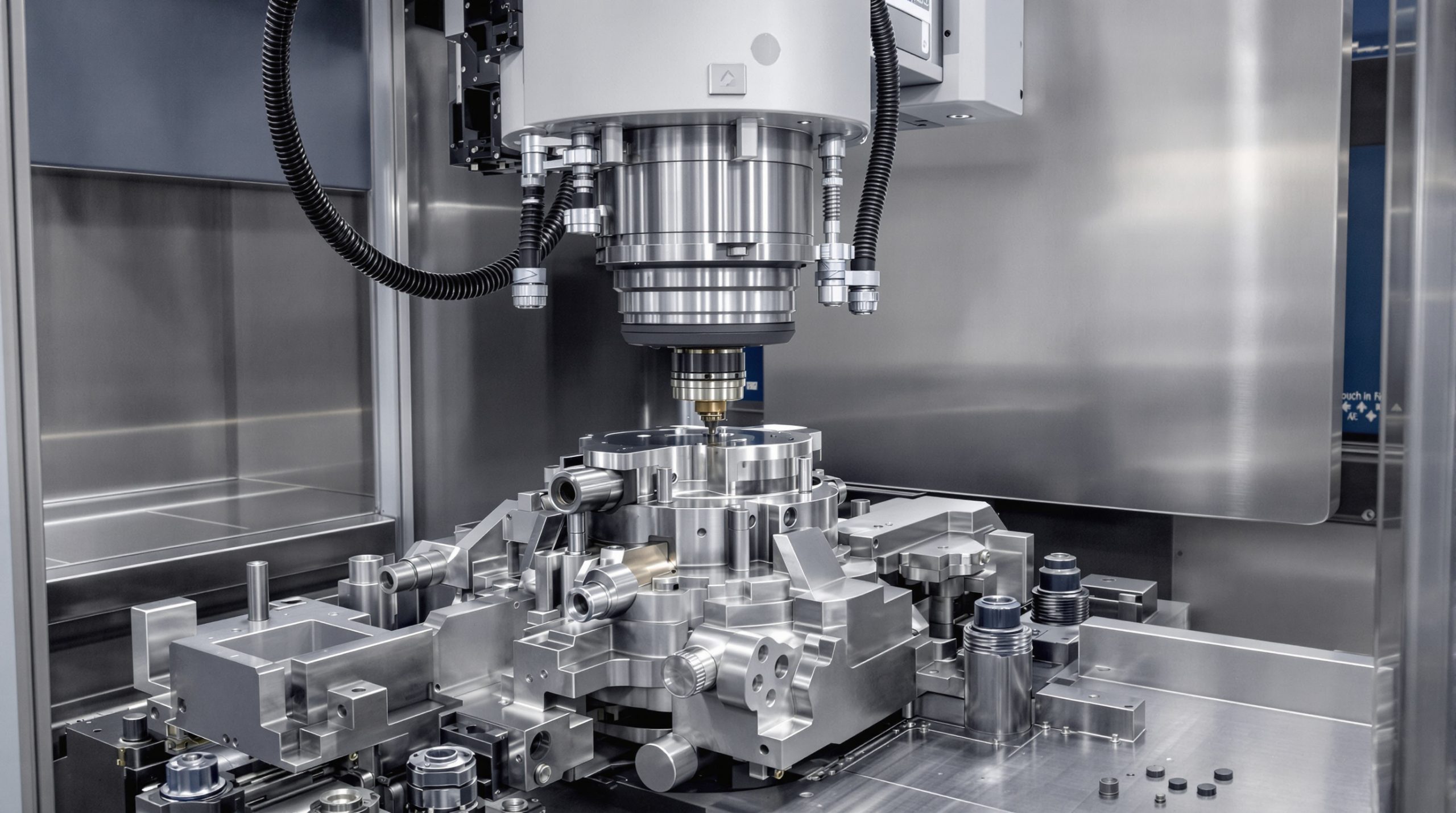
    Understanding the 5-axis machining process and its impact on workflow

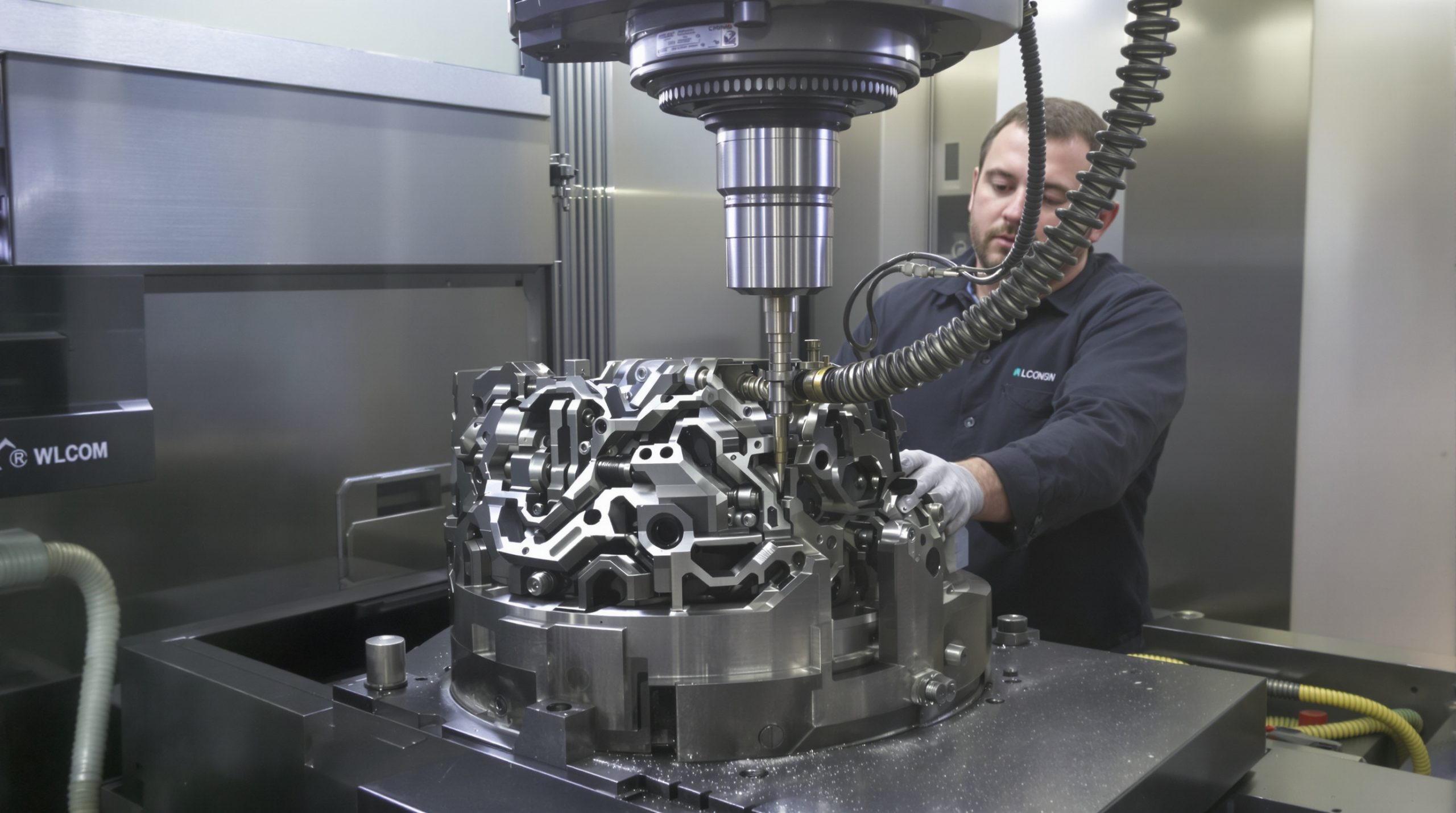
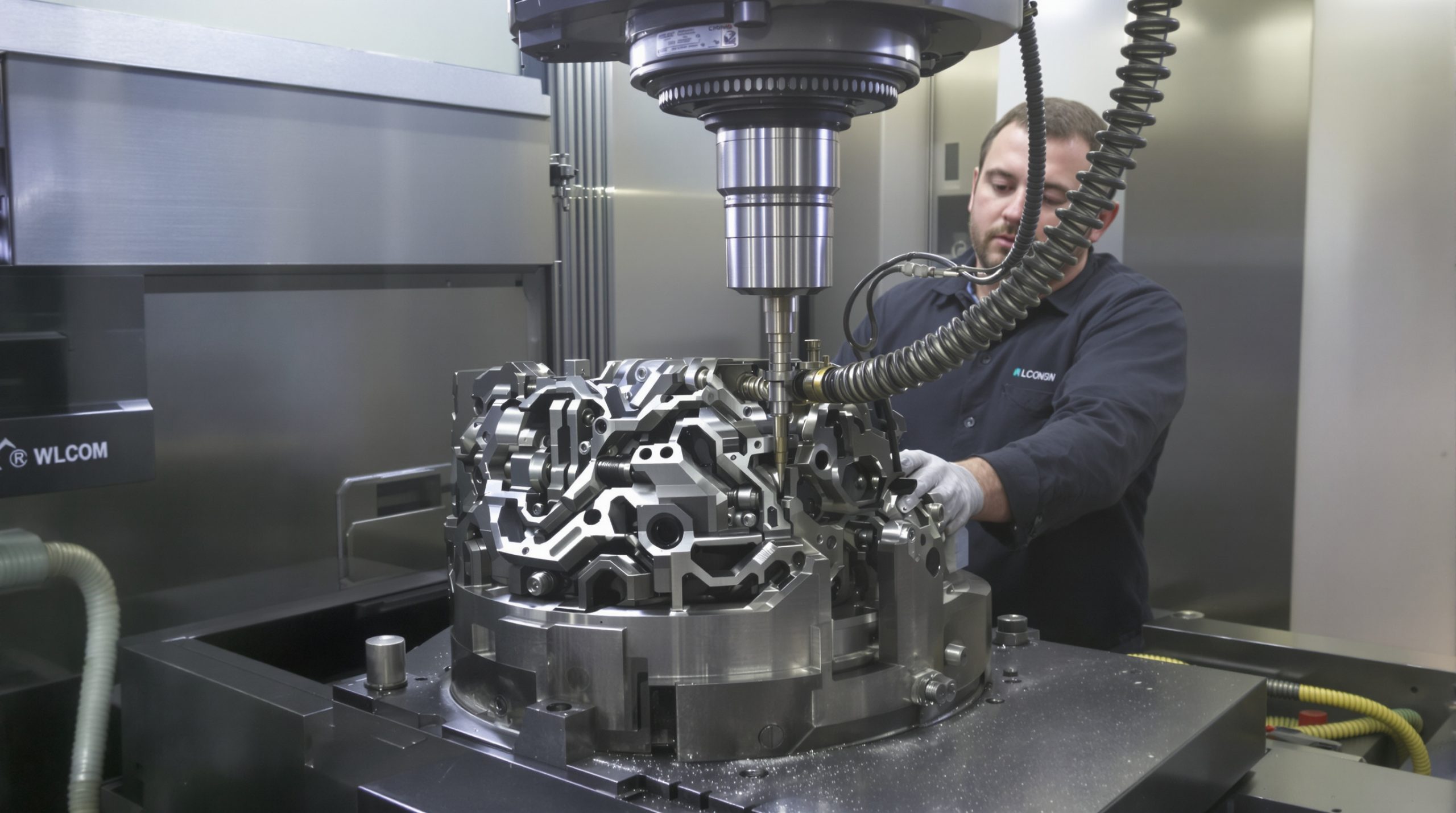
    Five axis CNC machines let cutting tools move freely along all five axes at once, which means they can reach parts from almost every possible direction. No more stopping the machine mid job to manually adjust positions either something that used to involve shutting down operations, setting everything back up again, and dealing with potential misalignment issues. Keeping everything in one setup cuts down on those annoying workflow breaks by around 63 percent when compared with older three axis systems. Machining reports from last year back this up, showing significant time savings for shops making complex components.

    Reduction in setup time and number of operations through integrated positioning

    Old school 3-axis machining usually needs several setups to get at all sides of a complicated part. We’re talking anywhere from 4 to 6 setups for really intricate components. And each time they stop and reposition, it eats up about 30 to 45 minutes not actually cutting metal. That adds up fast when making something like an aerospace part where we see roughly 165 minutes lost just in setup alone. Now look at what happens with 5-axis machines. These bad boys can handle most parts in just 1 or 2 setups, bringing down that wasted time to around an hour total. The magic comes from those built-in positioning systems that tweak the angle automatically as needed. This lets machinists keep going without stopping for those tricky curves and odd angles. Take one major aerospace company as proof. They managed to go from needing five separate setups for turbine blades down to just one single setup. The result? A massive 37% reduction in their overall production time.

    How automation in 5-axis CNC reduces human error during transitions

    When workers manually position parts, they tend to introduce alignment problems somewhere around once every eight setups according to recent industry data from Machinery Efficiency Report last year. Five axis machines cut down on these issues because they handle the tool path changes and rotate workpieces automatically. Most modern systems come equipped with collision detection features that keep everything moving smoothly across all axes. Some manufacturers report cutting waste by nearly 30% in sectors where precision matters most, such as when making medical devices. While automated processes definitely boost accuracy, there’s still some learning curve involved for operators who need to manage several machines at once instead of focusing on just one setup.

    Improving Part Accuracy and Surface Quality

    5-axis machining elevates precision manufacturing by enabling continuous tool engagement with complex geometries. This capability minimizes operator interventions while maintaining ±0.005 mm tolerances, critical for aerospace and medical components such as turbine blades or orthopedic implants.

    Enhanced Precision and Reproducibility in Complex Geometries

    Unlike 3-axis machines that require repositioning, 5-axis systems maintain optimal cutting angles during contouring operations. A helical toolpath can machine a turbine blade’s airfoil in one setup—reducing dimensional variances by 18% compared to multi-stage processes.

    Achieving Tighter Tolerances Through Improved Toolpath Control

    Advanced CAM software optimizes tool orientation to prevent deflection, particularly in deep-pocket milling. By keeping the tool perpendicular to curved surfaces, 5-axis systems reduce chord errors in arcs by 32% while ensuring consistent surface quality across production batches.

    Data Insight: Surface Finish Improvements up to 40% Compared to 3-Axis Systems

    The ability to maintain ideal chip load and cutting speed across compound angles reduces tool marks and post-processing needs. Automotive manufacturers report Ra (roughness average) values below 0.8 μm for 5-axis-machined transmission housings—a 40% improvement over conventional 3-axis results.

    Consolidating Manufacturing Operations for Greater Efficiency

    Integration of Turning and Milling Operations in 5-Axis Systems

    The latest 5-axis machining setups bring together turning and milling functions, allowing shops to run multiple operations without switching machines. No more moving parts back and forth between lathes and mills means fewer alignment problems overall. According to recent industry data from Machinery Trends in their 2024 report, this setup cuts down alignment issues by around 30 percent. For those tricky parts that need both rotation and straight cutting paths, these systems handle everything in a single clamp. This saves time and money while avoiding the kinds of errors that happen when parts get handled too much during traditional manufacturing processes.

    Streamlining Production with Fewer Machine Transfers and Fixtures
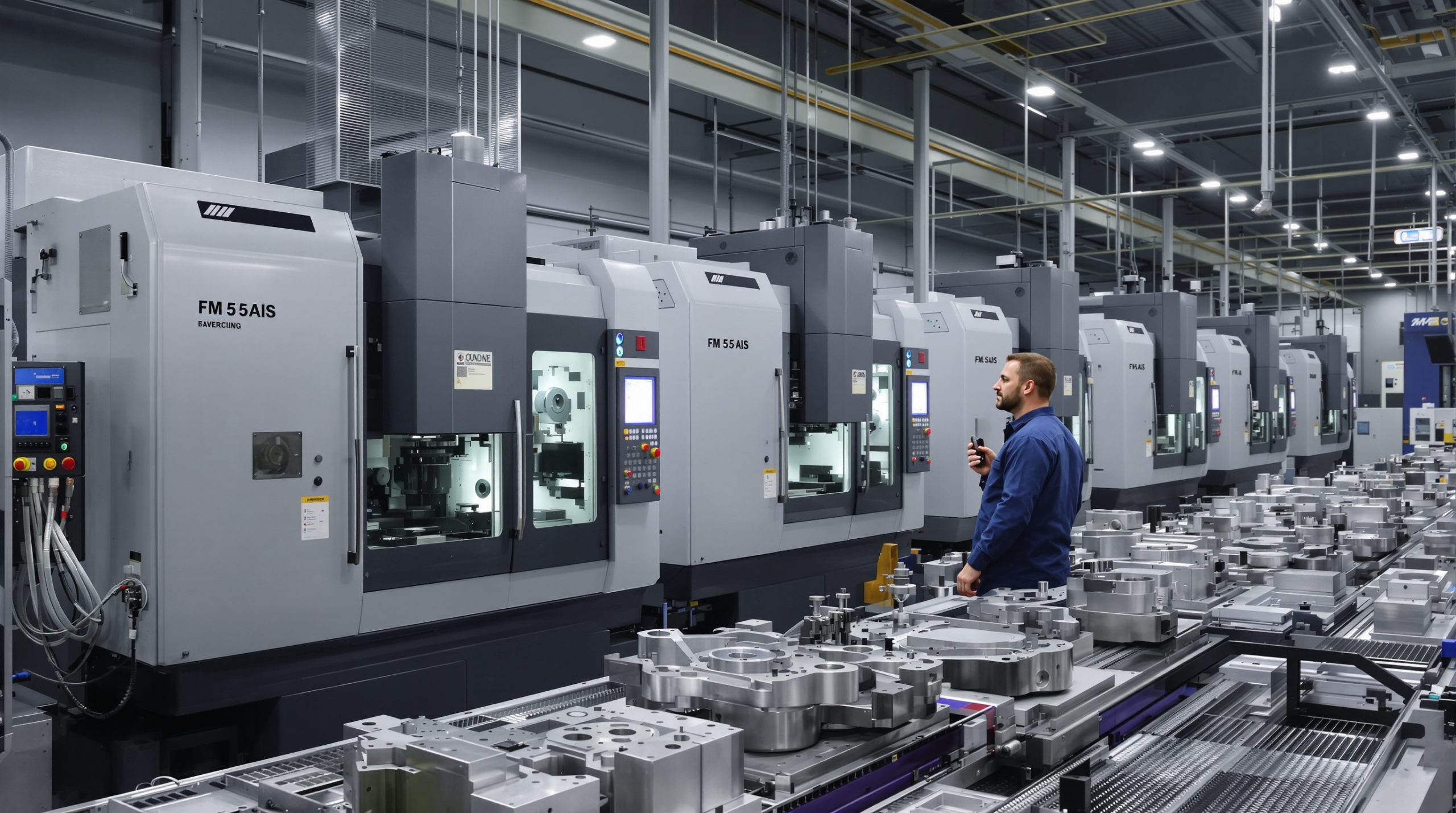
    Aerospace companies working with 5-axis systems have seen their need for fixtures drop by around half when making turbine blades. This reduction means fewer setups overall, which cuts down on both how long things take to produce and what they cost in tools. Take one car parts maker as an example they managed to shave off about 22% from each part’s production time simply because there were less transfers between machines. What makes this approach so good is that it keeps parts from getting damaged during those constant clamping steps, all while keeping position accuracy within just 5 microns or better. For shops dealing with tight tolerances, these kinds of improvements make a real difference in day to day operations.

    Trend: Adoption of Hybrid 5-Axis Machines for High Production Efficiency

    More companies across manufacturing sectors are turning to hybrid 5-axis systems that combine traditional machining with additive manufacturing capabilities for creating parts that require minimal post-processing. These integrated platforms cut down on the number of steps needed to finish a component, sometimes as much as 40% less than what was typical before. A real world case study from a medical device firm shows how these systems can save money too – they saw around 15% lower labor expenses when their machines started handling tool changes automatically and using single programming setups instead of multiple ones. What’s really interesting though is the trend towards machines that calibrate themselves. This development has made production lines run smoother between batches, cutting waiting periods by approximately 18% according to recent data. Manufacturers are finding these improvements not just cost effective but also essential for keeping up with modern production demands.

    Reducing Lead Times Through Setup and Fixturing Optimization

    Minimizing Fixturing Complexity Through Dynamic Workpiece Orientation

    The complexity of fixturing gets cut down quite a bit when we talk about 5 axis machining because the machine actually moves the part around while it’s working on it. Traditional 3 axis systems need all sorts of special fixtures every time they change how a part is positioned, but these newer machines have that extra movement capability across two more axes. According to some research from AMT back in 2023, shops can eliminate roughly between 60 and 80 percent of those fixtures when dealing with complicated shapes. Take turbine blades as just one case study here. These used to take something like twelve separate setups on older equipment, but now manufacturers are getting away with just one to three setups thanks to universal vises that work across different angles.

    Cost and Time Savings From Reduced Clamping Requirements

    Simpler fixturing directly reduces labor hours and material waste:

    • Clamping time reduction: 50–70% faster per part (IMTS 2024 Tooling Efficiency Report)
    • Fixture costs: $2,500–$15,000 saved per complex project by avoiding custom jigs
      Precision rotary tables maintain positional accuracy within 5 microns during dynamic repositioning, eliminating manual measurement steps between operations.

    Reduction in Lead Time With 5-Axis Machining Due to Consolidated Processes

    When companies combine drilling, milling, and finishing all in one setup, they typically see their production cycles shrink by somewhere between 30 to 60 percent. The aerospace industry has seen some impressive results too. One manufacturer cut down on wait times dramatically when switching to 5 axis systems. For those really important parts needed for flights, what used to take two weeks now gets done in just over a week. And there’s even more savings when looking at how tools move around during production. A test run by Haas Automation showed that optimizing these paths can speed things up by about 15 to 20 percent simply because machines spend less time moving without actually working on materials.

    FAQ Section

    What is 5-axis machining?

    5-axis machining allows cutting tools to move along five different axes simultaneously, enabling the machining of complex shapes from virtually any direction.

    How does 5-axis machining reduce setup times?

    By allowing most parts to be machined in just one or two setups, 5-axis machining significantly reduces the need for manual repositioning, thereby cutting down setup times and overall production costs.

    Why is 5-axis CNC considered more accurate?

    5-axis CNC machines use advanced CAM software to optimize tool paths and maintain tolerances, ensuring higher precision and consistent surface quality in complex geometries.

    How does 5-axis machining impact lead times?

    By minimizing fixturing complexity and integrating multiple operations in a single setup, 5-axis machining substantially reduces production lead times.
  • How Precision Machining Ensures High-Quality Parts for Critical Industries


    The Foundation of Precision Machining: Accuracy, Consistency, and Reliability

    Understanding Precision Machining and Its Role in High-Quality Manufacturing

    Precision machining relies on computer numerical control (CNC) machines and meticulous techniques to create parts with tolerances down to plus or minus 0.001 millimeters. The importance of this level of accuracy becomes clear when looking at critical sectors such as aircraft construction or surgical instrument production. A tiny error measured in microns could mean catastrophic failures in flight systems or life-saving medical equipment. When manufacturers take blocks of metal or plastic and shape them precisely according to blueprints, they’re not just following specs but actually bringing engineering drawings to life as dependable products that function reliably in demanding environments across multiple industries.

    Tight Tolerances and Dimensional Accuracy as Benchmarks of Excellence

    Precision machining today can actually produce parts with tolerances that are around 25 percent tighter compared to what was possible with older techniques. This follows industry standards like ASME Y14.5-2018 for reference. When parts fit together so precisely, it makes all the difference in complex systems where everything has to work perfectly. Think about things like turbine blades inside jet engines or even medical devices implanted in people’s spines. To check if these parts really meet those tight specs, manufacturers look at surface roughness values below 0.4 micrometers Ra. They also rely on special measuring equipment called CMMs to double check dimensions down to the micron level. These quality checks help maintain the exact specifications needed for high performance applications.

    Ensuring Part Consistency and Minimizing Variability Across Production Batches

    CNC automation gives manufacturers around 99.8% consistency between batches because it takes out all the unpredictable human factors from important tasks like setting tool paths and controlling spindles. The system uses statistical process control or SPC to keep an eye on things like hole sizes and surface flatness during production. This helps maintain Cpk values well above 1.67, which meets those tough Six Sigma requirements. As a result, there’s very little variation even when making thousands of parts at once.

    The Impact of Precision Machining on Product Safety and Long-Term Reliability

    Parts made to those tight aerospace specs tend to fail about 73 percent less often during stress tests than regular factory parts according to some research from the Journal of Advanced Manufacturing last year. The difference really matters when safety is on the line. Take titanium bone screws for example these little marvels have been showing around 98.6% success in fusing with bone tissue after being implanted for a decade. That kind of reliability isn’t just impressive stats it actually saves lives because people aren’t dealing with failed implants down the road.

    CNC Technology: Driving Precision and Automation in Modern Manufacturing

    How CNC Systems Enable Unmatched Accuracy and Repeatability

    CNC systems take digital designs and turn them into machine instructions so accurate they’re almost spot on, hitting measurements down to the micron level. According to research from Ponemon in 2024, these automated processes cut down on size mistakes by about 92% when compared to old school manual work. That’s why industries rely heavily on them for critical parts like airplane components and surgically implanted devices where precision matters most. Modern multi-axis machines keep their position super tight, around plus or minus 0.002 millimeters, which means products come out consistently good even after running through thousands upon thousands of manufacturing cycles without losing quality.

    Advancements in CNC Milling and Turning for Complex, High-Tolerance Components

    New technologies such as 5 axis machining and smart tool path adjustments have made it possible to create parts that simply couldn’t be manufactured before. Take turbine blades for instance. These blades now come out with incredibly smooth surfaces under 0.4 microns roughness average, all while keeping angles within just one hundredth of a degree tolerance. That’s pretty impressive when we think about how critical those specs are for engine performance. The same goes for hybrid machines that combine milling and turning operations. They’re changing how we make things like complicated car transmissions and medical screws. Setup takes less time, which means fewer mistakes during production runs. Manufacturers are seeing real benefits from these advancements both in terms of quality control and bottom line savings.

    The Role of Automation in Reducing Human Error and Boosting Efficiency

    Since around 2022, robotic tool changers paired with AI inspection tech have cut down on manual work in CNC operations quite a bit, maybe somewhere close to three quarters less hands on stuff. These in process probing systems take measurements as things happen, making automatic corrections when tools start wearing down or materials aren’t exactly what they should be. What this means is pretty much flawless results for important parts such as those used in electric vehicle batteries and components for medical robots. Manufacturers are seeing defect rates drop dramatically, though getting to absolute perfection remains tricky. Production time has also taken a hit, some shops reporting cuts of about 35-40% once these systems get properly integrated into their workflow.

    Precision Machining in Aerospace and Defense: Meeting Mission-Critical Standards

    High-tolerance requirements in aerospace, defense, and space applications

    The aerospace industry needs machining tolerances down to about 0.0001 inches or roughly 2.54 micrometers which is around 50 times tighter than what most industrial applications require according to recent industry standards. Parts for things like satellite navigation systems and those super fast hypersonic aircraft frames have to be worked on using special techniques for materials such as titanium alloys and carbon fiber composites. Getting these measurements right matters a lot because even tiny flaws at this scale can cause major problems when exposed to harsh conditions. We’re talking about situations where there’s no atmosphere at all in space or temperatures inside jet engines that can go past 2500 degrees Fahrenheit.

    Case study: Manufacturing precision turbine blades and structural components

    The importance of precision machining really stands out when looking at turbine blades. Modern manufacturers rely on 5-axis CNC machines to create these blades with incredibly precise aerodynamic shapes. The cooling channels inside are so thin they measure just 0.004 inches across, which is actually thinner than most people’s hair strands. When it comes to quality control, each turbine disk gets checked more than 200 times using coordinate measuring machines. These checks ensure the contours stay accurate within a tiny margin of error – around 2 microns. For structural parts such as wing spars, the whole component is often made from single pieces of aluminum rather than being welded together. This approach removes potential weak spots while also cutting down overall weight by roughly 15 to 20 percent compared to older assembly methods.

    Stringent quality control and compliance with aerospace safety regulations

    Getting AS9100D certified isn’t just recommended it’s required across the industry these days. The standard throws in 105 extra quality checks on top of what ISO 9001 already demands. Most manufacturers have built verification steps into their production process at all points along the way. Think about it starting with raw material analysis through spectroscopy, then moving on to tools that monitor wear in real time (these can spot tiny changes down to plus or minus 3 microns), right up until final CT scans complete the picture. Every single component gets tracked from when it first comes off the billet all the way to when it’s installed somewhere important. These records stick around for decades too some companies keep them for as long as 25 years especially for parts used in aircraft systems where failure isn’t an option. And let’s not forget what happens if things go wrong. A recent report showed that one bad bearing outside tolerance specs could cost upwards of eight million dollars in fines from the FAA alone according to the 2024 Aerospace Compliance Report.

    Medical and Automotive Applications: Where Precision Saves Lives and Enhances Performance

    Ultra-Precision Machining for Life-Critical Medical Implants and Surgical Tools

    Precision machining produces medical components with tolerances under 5 microns, essential for:

    • Orthopedic implants requiring seamless bone integration
    • Surgical tools with edge sharpness at 0.1–0.3 μm Ra surface roughness
    • Microfluidic chips with fluid channels narrower than a human hair

    According to the 2023 Medical Device Standards Report, components produced under ISO 13485 quality systems reduce post-surgical complications by 62% compared to conventionally machined parts.

    Achieving Zero-Defect Standards in Medical Device Manufacturing

    Six Sigma quality levels (3.4 defects per million opportunities) are achieved through:

    1. Real-time tool wear compensation
    2. Automated CMM validation
    3. Closed-loop feedback from optical comparators

    This consistency is crucial for FDA Class III devices such as pacemaker housings, where a 10-micron deviation can compromise hermetic sealing and device safety.

    Precision-Engineered Automotive Components for Safety, Efficiency, and EV Innovation

    Automotive manufacturers require ±0.005 mm accuracy for critical components:

    Component Precision Requirement Impact
    Fuel injector nozzles 1–2 μm orifice diameter 15% improvement in combustion efficiency
    EV battery housings 0.1 mm flatness tolerance Prevents thermal runaway
    Transmission gears AGMA Q15 tooth profile Reduces noise by 40%

    A 2024 SAE International study found that precision-machined braking components reduce emergency stopping distances by 27% in autonomous vehicles.

    DEPU CNC Shenzhen Co Ltd: Delivering Precision Across High-Stakes Industries

    Applying Advanced Precision Machining to Meet Aerospace, Medical, and Automotive Standards

    At DEPU CNC Shenzhen Co Ltd, advanced CNC tech is at the heart of making parts where getting under 5 microns matters for success. The company’s machines hit positional accuracy around ±0.002 mm when working on things like turbine blades for planes, surfaces for medical implants, and housing units for electric vehicle batteries. They tick all the boxes for tough industry standards including AS9100D and ISO 13485:2022. According to research from last year in the aerospace sector, companies that switched to DEPU’s multi-axis machining approach saw a massive drop in needing to fix mistakes after initial machining – about 63% less work overall compared to older methods. This level of precision means artificial joints actually pass those strict FDA surface finish tests (they need to be no rougher than 0.4 microns). For car gears too, their manufacturing keeps noise vibration harshness within acceptable limits even after going through half a million cycles of testing.

    Innovative Quality Assurance and Traceability in Every Production Phase

    DEPU has developed a closed loop quality control system that combines real time monitoring of tool paths along with blockchain technology to track materials. This gives complete visibility from raw titanium ingots all the way through to finished aircraft actuators. The company’s special SPC dashboard catches any production issues when they go beyond 1.5 standard deviations, which helps explain why their medical product batches only have a 0.02% defect rate. That’s way better than the usual industry standard of about 0.15%, according to Medical Design & Outsourcing in 2023. For inspecting tiny features at the micron level, DEPU uses AI powered optical systems that work roughly 12 times quicker than what people can do manually. These systems still manage to hit nearly perfect accuracy rates around 99.98%. This makes sure everything meets requirements for FDA approved spinal implants as well as pressure vessels certified under ASME standards.

    FAQ Section

    What is precision machining?

    Precision machining involves using computer numerical control (CNC) machines to produce parts with extremely tight tolerances, down to plus or minus 0.001 millimeters, for critical industries such as aerospace and medical devices.

    Why is tolerance important in precision machining?

    Tight tolerances ensure that parts fit together accurately in complex systems. This is crucial in industries like aerospace, where even slight deviations can lead to significant problems.

    How does CNC technology enhance precision machining?

    CNC technology converts digital designs into machine instructions, improving accuracy and reducing the incidence of errors compared to manual methods.

    What industries benefit from precision machining?

    Precision machining is invaluable in aerospace, medical, automotive, and defense industries, where high tolerance and reliability are critical.

    How do advancements in CNC milling and turning improve manufacturing?

    New technologies, such as 5-axis machining, allow the fabrication of complex and high-tolerance components with greater efficiency and precision.

  • What Is Precision Machining? A Complete Guide for Beginners

    What Is Precision Machining? Definition and Key Principles

    Definition of Precision Machining and Its Significance in Modern Manufacturing

    Precision machining refers to a subtractive manufacturing method where computer controlled CNC machines are used to make parts with extremely tight tolerances, sometimes down to plus or minus 0.005 inches. When CAD CAM software comes into play, it basically turns those digital blueprints into precise cutting paths that allow for accuracy at the micron level. The importance of this kind of precision cannot be overstated, especially in sectors such as aerospace engineering or medical device production. A single inconsistency in these parts can mean serious consequences for both safety and how well things perform overall. Looking ahead, market analysts predict that the worldwide precision machining industry will grow substantially, reaching around 180.25 billion dollars by the year 2030 with an annual growth rate of about 7.8 percent. This expansion seems to be fueled largely by increasing needs from areas like advanced robotics development and the push towards renewable energy solutions across various industries.

    How Precision Machining Differs from Conventional Machining Methods

    Traditional machining depends heavily on hands-on work and usually gets around ±0.01 inch tolerance levels. Precision machining takes a different approach altogether. With CNC systems handling everything from choosing tools to setting cutting speeds and positioning parts automatically, these machines can hit ±0.001 inch accuracy again and again. Think about it – manufacturers can now produce batches of 10,000 medical screws where each one measures within just 5 microns of perfection. Manual techniques simply cannot keep up with such consistency past maybe 100 pieces at best. The numbers back this up too. According to research from NIST in 2023, automated processes cut down human mistakes by roughly two thirds. This makes all sorts of complicated shapes possible on a large scale something that would be nearly impossible with traditional methods alone.

    The Role of Tolerances and Surface Finish in Defining Precision

    When talking about precision manufacturing, tolerances and surface roughness (Ra) really tell us what we need to know. Take aerospace turbine blades for instance they need super tight specs around 0.0002 inches plus or minus and a surface finish of about 0.4 micrometers to handle all those harsh operating conditions. If parts fall outside of 0.01 inch tolerance range, studies from the Society of Manufacturing Engineers show failure rates jump by nearly 20%, which means some manufacturers lose close to seven hundred forty thousand dollars each year just from these issues. On the flip side, when surfaces are smoother in the range of Ra 0.8 to 1.6 micrometers, there’s less friction inside hydraulic systems. That actually makes them run better too, boosting energy efficiency somewhere around 15 percent. All these numbers point to one thing precision matters a lot when building equipment that has to perform under pressure.

    The Role of CNC Technology in Achieving Precision

    Introduction to CNC Machining and Milling in Precision Manufacturing

    CNC tech, which stands for Computer Numerical Control, forms the backbone of today’s precision machining industry. The system takes those digital designs made on computers and turns them into actual paths for cutting tools to follow during manufacturing. What makes CNC so impressive is how accurately it controls dimensions sometimes as tight as plus or minus 0.005 millimeters. Think about industries where such tiny measurements really matter. In aerospace engineering for instance, getting just one decimal point wrong could mean disaster when parts don’t fit together properly. Similarly in medical device manufacturing, slight errors might lead to implants that simply won’t work correctly inside human bodies. That’s why manufacturers across these critical fields rely heavily on CNC machines day after day.

    How CNC Systems Enhance Accuracy, Repeatability, and Efficiency

    CNC machines use closed-loop feedback systems to monitor and correct tool positioning in real time. According to a 2023 study in the Journal of Manufacturing Systems, advanced CNC systems reduce dimensional errors by 63% compared to traditional methods. Key advantages include:

    • Repeatability: Automated processes ensure 99.8% part conformity across large production runs (Ponemon 2023).
    • Multi-axis coordination: 5-axis machining allows complex shapes to be produced in a single setup, cutting lead times by 40%.

    Evolution of CNC Technology and Its Impact on Industrial Production

    Starting back in the 1950s, computer numerical control tech went through some major transformations, moving away from those old punch card systems all the way to what we see today with AI helping out during machining processes. Modern day equipment comes packed with Internet of Things sensors that keep an eye on vibrations as they happen and adjust for temperature shifts too. These sensors actually fix tiny issues down to about plus or minus 2 microns when conditions change around them. The improvements made over time have really pushed things forward in manufacturing circles. Take semiconductors for instance – companies want surfaces so smooth they measure under Ra 0.1 micrometers roughness average. Getting there requires nothing short of top notch CNC setups these days.

    Industry Paradox: High Initial Cost vs. Long-Term Precision and ROI

    Investing in CNC machines means spending a pretty penny upfront, usually somewhere between 150k and 500k dollars, but the money pays off over time. These machines cut down on wasted materials by around 23 percent, which adds up fast. Plus they get products to market quicker too, shaving about 34% off the timeline for those precision parts that need tight tolerances. The numbers back this up as well. Medium sized shops report saving roughly 740 grand each year just on quality control alone after switching to CNC technology. Makes sense when you think about it all together both from a wallet perspective and how smoothly operations run day to day.

    The Precision Machining Workflow: From CAD Design to Final Inspection

    Design Phase Using CAD Software in Manufacturing Workflows

    The process begins with CAD (Computer-Aided Design) software, where engineers create 3D models with exact dimensions and micro-level tolerance specifications—often as tight as ±0.001 mm. This digital approach eliminates manual drafting errors and reduces material waste by up to 50% compared to traditional design methods.

    CAM Programming and Toolpath Generation for CNC Execution

    After finalizing the CAD model, CAM (Computer-Aided Manufacturing) software generates machine-readable G-code that defines toolpaths, spindle speeds, and feed rates. Advanced CAM systems simulate the entire machining sequence to detect collisions and optimize cycle times—critical for maintaining efficiency in high-volume production.

    Machine Setup, Material Selection, and Workholding

    When choosing materials for machining jobs, operators typically go for stuff like aerospace grade aluminum or medical grade stainless steel because they need certain properties for the job at hand. To keep raw stock from moving around while running at high speeds, shops usually clamp it down with hydraulic chucks, standard vises, or sometimes vacuum tables depending on what works best for the material. Getting good results really depends on keeping everything stable since any vibration can mess up measurements and leave rough surfaces that nobody wants. And don’t forget about calibrating tools properly before starting work either. A shop I visited last week had all their CNC machines calibrated weekly just to maintain consistent cuts across different projects.

    Machining Execution and Real-Time Monitoring

    During execution, CNC machines follow programmed instructions while embedded sensors monitor temperature, vibration, and tool wear. Closed-loop systems dynamically adjust parameters—for instance, compensating for tool deflection in deep cavities—reducing scrap rates by 30–40% compared to non-monitored processes.

    Post-Processing, Inspection, and Quality Assurance

    After machining, parts undergo post-processing steps like deburring, polishing, or anodizing. Final inspection involves CMMs (Coordinate Measuring Machines) to verify dimensions against the original CAD model and surface profilometers to measure roughness down to 0.1 µm. Statistical process control charts track variation, ensuring 99.9% compliance with ISO 9001 standards before delivery.

    Core Precision Machining Techniques and Their Applications

    CNC milling: Principles, applications, and dimensional accuracy

    CNC milling works by using computer controlled rotating cutting tools to take away material from workpieces. The precision here can get really impressive, sometimes down to just 0.001 inch tolerance according to industry standards like ASME B46.1-2023. This method shines when making intricate parts with features like pockets, slots, and those complicated 3D shapes we see in things like car transmissions and airplane bracket components. What makes it reliable is the closed loop system that keeps track of position throughout the process. As a result, manufacturers can expect pretty smooth surfaces ranging from about 8 to 32 micro inches roughness average, which matters a lot for how well these parts will perform in their final applications.

    CNC turning and Swiss machining for complex cylindrical parts

    CNC turning produces rotationally symmetric components like hydraulic valve bodies and semiconductor fittings, holding diametral tolerances within 0.0005″. Swiss machining enhances this capability for slender, high-precision parts such as dental implant screws. By guiding material through a sliding headstock, it enables simultaneous turning and threading while maintaining concentricity below 0.0002″ TIR.

    Precision grinding for ultra-fine surface finishes

    Surface grinding delivers finishes below 0.4 µm Ra using abrasives like aluminum oxide or CBN wheels—essential for pump seals and bearing races. Creep-feed grinding combines high material removal rates (up to 50 mm³/s) with submicron accuracy, making it suitable for turbine blade roots in gas turbines.

    Electrical Discharge Machining (EDM) for intricate geometries

    EDM removes material via controlled electrical discharges, allowing for sharp internal corners (down to 0.001″ radii) and micro-hole drilling (Ø0.004″) in conductive materials. Wire EDM can cut 12″ thick tool steel with kerf widths under 0.006″, preserving integrity in hardened alloys used for fuel injector nozzles and die-casting molds.

    Multi-axis CNC machining: Expanding beyond 3-axis capabilities

    5-axis CNC systems enable tilting and rotating of the workpiece during milling, allowing single-setup production of complex parts like aircraft bulkheads and orthopedic implants. A 2022 NIST study found that 9-axis configurations reduce cycle times by 62% on prismatic components while maintaining positional accuracy within 0.0008″, accelerating production in automotive EV manufacturing.

    FAQ

    What is precision machining?

    Precision machining involves using computer-controlled CNC machines to manufacture parts with extremely tight tolerances, often down to ±0.005 inches, suitable for sectors like aerospace and medical devices.

    How does precision machining differ from traditional machining?

    Unlike traditional machining, which relies on hands-on work, precision machining employs CNC systems for automated processes, achieving tolerances as tight as ±0.001 inches consistently.

    What role does CNC technology play in precision machining?

    CNC technology is integral to precision machining, converting digital designs into precise cutting paths and achieving high accuracy, repeatability, and efficiency across industries.

    What are the main applications of CNC milling?

    CNC milling is used for making intricate parts with high dimensional accuracy, suitable for components like car transmissions and airplane brackets.

    What benefits does Swiss machining offer?

    Swiss machining is ideal for slender, high-precision parts such as dental implant screws, allowing simultaneous turning and threading while maintaining high concentricity.

  • Choosing the Best 5 Axis Mill: Key Features to Look For

    Choosing the Best 5 Axis Mill: Key Features to Look For

    Understanding 5 Axis Mill Technology and Core Advantages

    What is 5-axis machining and how does it differ from 3-axis milling?

    Five axis CNC milling machines work with three straight line movements (X, Y, Z) plus two rotation points (usually A and B). These allow tools to move freely across all five directions at once. Traditional 3 axis machines struggle with complicated shapes because they need constant readjustment by hand. But five axis equipment tilts either the part being worked on or the cutting tool itself to keep the best possible angle during machining. The result? Fewer times when operators have to stop and reset everything. Manufacturers in industries like aircraft production, car manufacturing, and medical device making find this particularly valuable since it lets them create intricate parts without compromising quality or increasing production time.

    Key benefits of 5-axis CNC machining: reduced setup time and enhanced versatility

    When parts can be machined through multiple operations while still clamped in place, 5 axis mills significantly reduce those little errors that build up when parts get moved around too much during production. According to some research published last year in manufacturing circles, shops that switch to these advanced machines see their setup times drop by almost two thirds compared to what they used to spend on regular 3 axis setups. What really sets them apart though is how those rotating axes work together to handle complex shapes like curved surfaces, tricky undercuts, and those hard to reach deep pockets that basic machines just cant touch. Because of all this flexibility, many toolmakers and prototype shops have started relying heavily on 5 axis CNC milling for creating custom molds, testing new product designs, and running small batches where precision matters most.

    Superior surface finish and precision in complex geometry processing

    The shorter tool paths made possible through rotational axes help reduce deflection during machining operations, resulting in surfaces that are about half as rough compared to what we get with standard three axis machines. When there’s constant contact between the cutting tool and the material being worked on, vibrations drop significantly too, allowing for tight tolerances around plus or minus 0.005 millimeters even when working with tough materials like titanium or inconel alloys. Industries manufacturing parts such as aircraft turbine blades or medical implants really need this kind of accuracy because tiny flaws at microscopic levels can actually break down how these components function properly over time.

    Common limitations and challenges of 5 axis CNC machining

    The 5 axis mill is great for making complicated parts but comes with some serious requirements. These machines need programmers who know their stuff plus special systems to handle the dimensional changes caused by heat buildup during operation. Let’s talk numbers for a moment. The upfront cost typically goes beyond half a million dollars, and keeping them running smoothly costs around 30 to maybe even 40 percent more compared to regular 3 axis machines. For many shops, especially smaller ones, this creates a real dilemma. They have to weigh those big expenses against how much faster production becomes. Sometimes when parts aren’t too complex, all that extra capability just isn’t worth it from a business standpoint.

    Comparing 5 Axis Mill Configurations and Their Impact on Performance

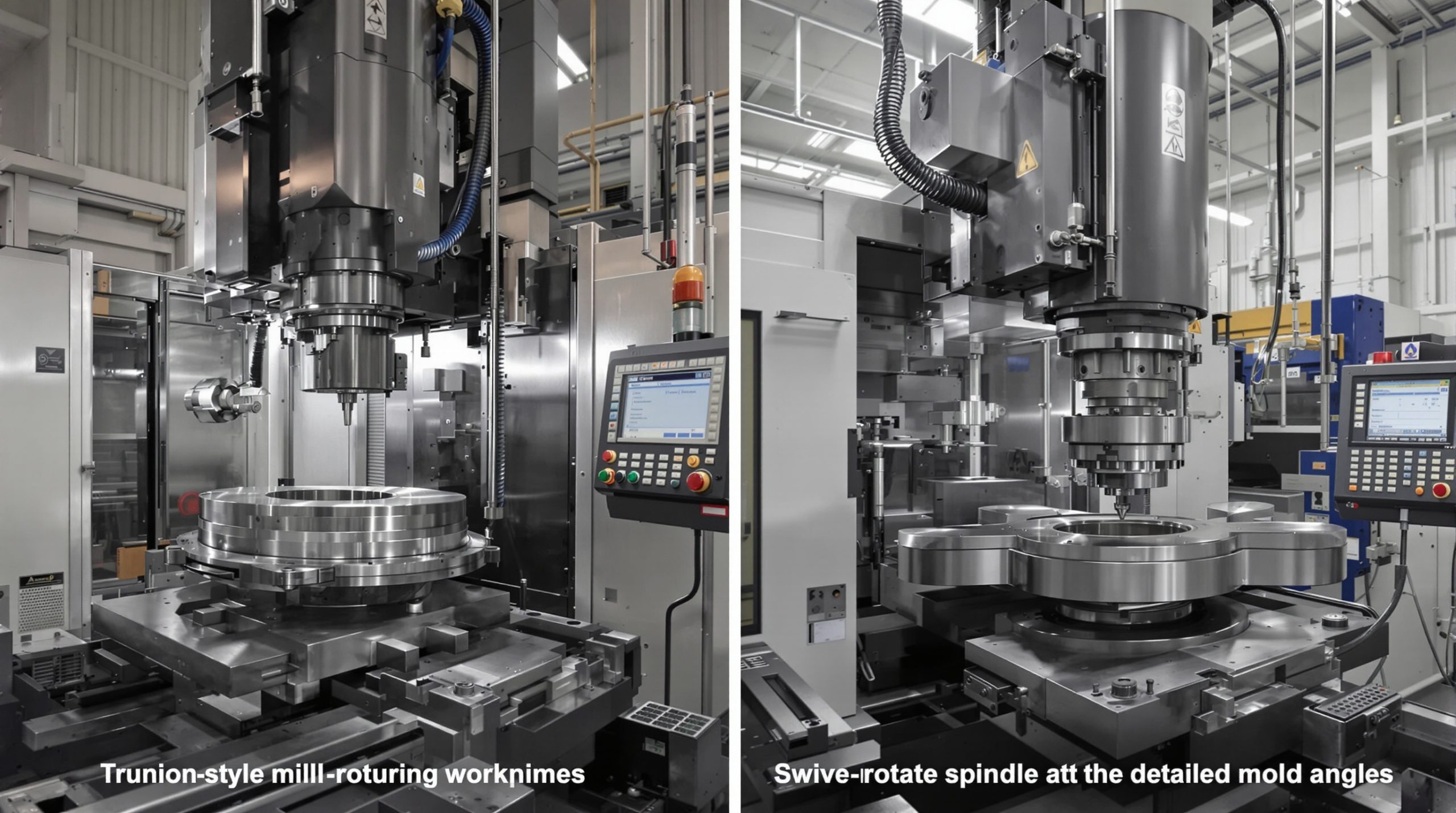
    Trunnion-style vs. swivel-rotate-style 5-axis machine designs

    Trunnion style machines work by rotating the workpiece across two axes – usually labeled as A (X-axis) and C (Z-axis) rotary tables. This setup helps keep things stable when cutting through tough materials, which is why they’re so popular for making parts used in airplanes and spacecraft. On the other hand, swivel rotate machines have their spindle mounted on different swivels, typically along B (Y-axis) and C (Z-axis). These allow machinists to get into those tricky angles needed for detailed molds and complex shapes. Most shops find that trunnion machines hold up better when removing lots of material quickly, but when dealing with tight spaces and complicated undercuts, swivel configurations tend to win out because they just don’t interfere with the workpiece as much during operation.

    Double pivot spindle head and table-tilting configurations compared

    The double pivot spindle head allows tools to move in all directions which is really important when working on turbine blades. Meanwhile, table tilting setups move the actual workpiece around on angled beds instead. Some advanced 5 axis milling machines actually merge these two approaches together so they can manipulate both the workpiece and the cutting tool at once without needing to stop and reposition anything for parts with multiple surfaces. While universal machine setups give operators the most flexibility possible, they do come with added complexity. For simpler jobs involving boxy shaped components, tilting table machines tend to be better suited since they maintain straightforward workflow processes. How stable a machine stays over time depends a lot on its design specifics too. Machines equipped with built in cooling systems generally stay more accurate throughout lengthy operations where temperature fluctuations would otherwise cause problems.

    Understanding 3+2 axis machining versus continuous 5-axis milling

    The 3+2 machining technique holds the cutting head at compound angles which simplifies those tricky 3-axis milling paths. This works great when dealing with multiple flat surfaces that need precise positioning. Then there’s continuous 5-axis milling where the tool moves in all directions at once. The result? Tolerances around 0.02mm as per ISO standards, perfect for things like impeller blades with their complex shapes. According to some research from the Tooling Research Institute, switching to 3+2 can cut down programming headaches by about 40%. But what really stands out is continuous milling’s ability to do away with those pesky secondary setups completely. For intricate contours like medical implants, this approach saves roughly two thirds of the usual machining time compared to traditional methods.

    Work envelope size, part accessibility, and rigidity across configurations

    Machine design directly dictates usable workspace; trunnion systems typically offer 20% larger envelopes but sacrifice deep-pocket reach versus articulated-arm configurations. Compare accessibility metrics:

    Configuration Max Tool Angle Deep Cavity Access Rigidity Index
    Trunnion Table 110° Moderate ⭐⭐⭐⭐⭐
    Swivel-rotate Spindle 130° Excellent ⭐⭐⭐⭐⭑
    Hybrid Universal 180° Superior ⭐⭐⭐⭐⭐

    Rigidity correlates with vibration resistance: monolithic castings in trunnion systems yield 15% higher material removal rates for titanium than cantilevered swivel designs according to machining benchmarks.

    Evaluating Precision, Rigidity, and Thermal Stability in 5 Axis Mill Systems

    The role of machine rigidity and dynamic stability in high-accuracy milling

    Getting down to micron level accuracy with 5 axis CNC milling really comes down to how sturdy the machine is built. Machines that resist bending under cutting force are essential for this kind of work. When manufacturers build these machines with solid structural designs and fill them with granite bases, they get better stability. This helps cut down on vibrations even when the spindle spins at crazy fast speeds like 15,000 RPM. And let’s face it, stiffness matters a lot for those fine details on the surface finish. A good rigid 5 axis mill can stay accurate to within just 5 microns while working on tough materials like aerospace alloys, something that makes all the difference in high precision manufacturing environments.

    Thermal compensation systems and long-term precision in 5 axis mills

    Keeping things running continuously is tough because of thermal expansion problems. When temperatures change, bearings and screws can shift as much as 20 microns per meter. To deal with this issue, modern equipment now includes sensors built right into the spindle housing and ballscrew components. These sensors send live information straight to the CNC controller so adjustments happen automatically. What does this mean? The machines stay super accurate at around plus or minus 0.001 inches throughout an entire 8 hour shift. And this level of precision isn’t just nice to have either. Medical implant manufacturers rely on these tolerances since even tiny deviations could affect patient safety in critical applications.

    Measuring accuracy: ISO standards vs. real-world performance in 5-axis CNC machines

    ISO 230-2 outlines standard testing procedures that rely on laser interferometry techniques, but what happens in actual practice often depends heavily on how things are set up and what tools are being used. Research indicates that temperature changes alone contribute to about 60 percent of all measurement inaccuracies when compensation isn’t applied properly. Looking at recent findings from studies on ultra precision milling operations reveals something interesting too. When manufacturers implement these advanced error mapping strategies, they actually see a noticeable drop in measurement discrepancies. These improvements help close the distance between theoretical lab results and what really occurs during everyday manufacturing processes on factory floors.

    Optimizing Spindle Performance and Feed Rate for 5 Axis CNC Milling

    Spindle Speed, Torque, and Power Requirements for Diverse Materials

    When working with modern 5 axis milling machines, getting the right spindle setup for different materials makes all the difference. Aluminum and composite materials work best when the machine spins above 40,000 RPM. This keeps production moving fast without letting too much heat build up in the workpiece. Things change quite a bit when dealing with hardened steels though. These materials need slower speeds between 6,000 and 12,000 RPM but require significantly more torque power, at least 40 Newton meters to keep cutting effectively. Maintaining position accuracy becomes really important over long machining sessions. Good thermal compensation systems help keep errors within plus or minus 5 microns. This is especially crucial when machining titanium since the cutting forces can jump around so much during operations.

    Feed Rate Optimization Techniques for Efficient 5 Axis Milling

    Getting the right balance between feed rate and chip load keeps tools from deflecting while still maintaining good productivity levels. When working on those tricky thin wall parts in aerospace manufacturing, adaptive feed systems can tweak speeds anywhere from 15 to 30 percent automatically. According to research from NIST back in 2023, this kind of adjustment actually cuts down overall cycle time by around 22%. Dealing with complicated shapes requires something special though. Vector based path planning for cutting tools maintains consistent chip thickness throughout the operation. Industry tests have found this approach extends tool life by about 35% over standard linear methods, which makes a big difference when running production batches.

    Case Study: High-Speed Spindle Integration in Aerospace Component Manufacturing

    One turbine blade maker saw their production cycles speed up by nearly 20% after switching to a new hybrid spindle setup that packs 30 kW peak power along with those impressive 42,000 RPM capabilities. What really makes this system stand out is how it handles vibrations during operation. The active damping tech brought down surface roughness measurements from around 0.8 microns all the way down to just 0.3 microns, which actually meets those strict standards required for jet engine blades. And here’s something else manufacturers are talking about these days: this particular configuration allows them to machine those heavy duty Inconel 718 engine mounts that weigh about 14 kilograms in one single setup. Before this innovation came along, workers had to go through no fewer than three different operations using standard 3-axis machines to get the job done right.

    Matching 5 Axis Mill Features to Your Production Needs: A Buyer’s Guide

    Key Specifications to Evaluate When Choosing a 5 Axis Mill

    Selecting the right 5 axis mill requires balancing techni

  • How a 5 Axis Mill Boosts Precision and Reduces Production Time

    How a 5 Axis Mill Boosts Precision and Reduces Production Time

    The Technological Evolution Behind the 5 Axis Mill

    From 3-axis to 5-axis CNC machining: a technological leap

    Moving from standard 3-axis to advanced 5-axis CNC machining marks a real game changer for precision manufacturing work. Older 3-axis systems can only move along straight lines on X, Y, and Z axes, which means machinists have to stop and reposition parts several times when working on complicated shapes. The newer 5-axis machines solve this problem by adding those extra rotational A and B axes, so tools can reach into tricky angles without all the setup changes. According to recent data from CNC Tech Insights (2023), shops using these machines see around 60% fewer positioning steps, making it possible to cut those detailed curves and hard-to-reach areas without breaking stride. This kind of capability is exactly what companies in aerospace and medical device manufacturing need, especially since they often require components with tolerances down to just 0.005mm or better for critical applications.

    Key differences between 3, 4, and 5-axis machining capabilities

    The core distinctions lie in motion freedom and precision outcomes:

    Machining Type Axes Complexity Limit Setup Efficiency Tolerance Range
    3-axis X/Y/Z Low-moderate 3-5 repositions ±0.1mm
    4-axis +1 rotational Moderate 1-2 repositions ±0.05mm
    5-axis* +2 rotational High Single setup ±0.025mm
    *Simultaneous axis control        

    While 3-axis systems excel at prismatic parts, 5-axis technology dominates in producing complex, contoured components such as turbine blades through dynamic tool orientation.

    How simultaneous multi-axis control elevates precision

    With true 5 axis machining, manufacturers can reach incredible levels of precision at the micron scale because all five axes move together at once. The machine keeps changing the cutting tool’s position constantly so it stays perfectly aligned with whatever part is being made. When compared to regular 4 axis setups where one axis gets locked during certain cuts, these simultaneous movements help reduce how much the cutting tool bends or deflects. That means better control over how chips form when material gets removed from parts, which cuts down on vibrations during operation. According to research published last year in the Precision Engineering Journal, surface quality actually improves around 60 percent with this approach. What makes 5 axis machines so special? They let engineers create complex shapes that just aren’t possible using traditional methods. Think about those spiral passages inside engine blocks or the tiny threaded sections on surgical implants. These kinds of features have become standard requirements across many industries where component reliability matters most.

    Achieving Unmatched Precision with 5 Axis Mill Technology

    Enhanced precision and tighter tolerances through dynamic tool positioning

    Five axis milling machines can get surface deviations down below 0.004mm because they adjust the tool angles as they cut through materials. The way these machines manage cutting forces helps avoid those annoying vibrations that mess up precision in regular three axis systems. When working on titanium parts for airplanes where tolerances need to be within plus or minus 0.0005 inches, the constant rotation of the A and B axes keeps the cutting tool perfectly perpendicular to what it’s machining something that just isn’t possible with standard fixed setups. The benefits are pretty impressive too. Shops report needing about 75% less polishing work after machining, and the final products maintain their exact shape even on really complicated surfaces.

    Role of precision engineering in 5-axis CNC custom machining

    Precision engineering enables 5-axis performance through three critical systems:

    • Thermal-compensated ball screws delivering ±2¼m positioning accuracy
    • Rigid machine frames that dampen vibrations below 0.1g
    • Real-time servo feedback correcting position 4,000 times per second
      Together, these technologies achieve rotational axis repeatability under 8 arc-seconds—essential for medical implants where deviations under 5¼m impact biocompatibility and long-term performance.

    Case study: aerospace component production with sub-0.001mm accuracy

    Manufacturers who work with turbine blades have found that when they use 5-axis milling machines, they get really impressive results. The conformity rate for nickel alloy parts goes up to nearly 99.8%. These machines can handle those tricky 57 degree undercuts along with airfoil shapes all in one go without having to move things around. When companies stop needing to refixture their parts during production, it takes away one big problem area where positioning errors happen. This allows them to maintain incredibly tight tolerances of 0.0008 millimeters even on complex curved surfaces. What does this mean practically? Well, scrap rates drop dramatically from 22% down to only 0.3%, which saves a ton of material costs. Plus, each batch requires 40 fewer hours spent on inspections, freeing up valuable shop floor time for other tasks.

    When is a 5 Axis Mill necessary for high-precision tasks?

    When dealing with complex shapes that need access from really steep angles, like those over 45 degrees undercut, a 5 axis mill becomes necessary. For parts where tiny tolerances matter so much that even small setup errors could add up beyond plus or minus 0.005 inches, traditional methods fall short. Hard materials above HRC 50 hardness also create problems because they bend tools if not approached correctly. And let’s face it, medical implants and aircraft components simply won’t meet their finish requirements unless we get down to sub 0.4 microns roughness average. That’s where 5 axis machining shines compared to regular three axis work. It actually makes possible those tight dimensions and smooth surfaces that just aren’t achievable step by step with conventional equipment.

    Reducing Production Time Through Streamlined 5 Axis Mill Workflows

    Fewer Setups in Machining Processes: The Cornerstone of Faster Turnarounds

    Five axis milling machines bring together several different machining steps all in one go, cutting down on manufacturing time by around 65% when compared with traditional three axis techniques. These machines give complete access to complex shapes without needing to move parts around between operations, which saves those precious 2 to 3 hours usually lost during setup changes. Take turbine blades for instance something that used to need at least four different setups is now possible in just a single clamp. This dramatic reduction in handling means factories can produce more components faster while maintaining quality standards across the board.

    How 5-Axis Milling Machines Eliminate Re-Fixturing Delays

    Integrated rotary axes allow continuous tool access to all part features without removing the workpiece, eliminating 78% of fixturing-related downtime (2024 machining benchmarks). One aerospace supplier reduced fixture preparation from 14 hours to just 35 minutes after adopting 5-axis technology, streamlining production and improving consistency.

    Data Insight: 40–70% Reduction in Production Time Reported by Leading Manufacturers

    Across 23 industries, manufacturers report cutting average cycle times from 11.2 hours to 3.7 hours using 5-axis workflows. A medical device company achieved 68% faster implant production while maintaining 0.002mm tolerances—critical for FDA compliance. Clients of a Shenzhen-based CNC innovator attribute 40–70% time savings to reduced toolpath complexity and automated tool changes.

    Trend Analysis: Growing Adoption of 5-Axis for Rapid Prototyping

    85% of machine shops now prioritize 5-axis systems for prototyping, shortening automotive R&D cycles by 6–8 weeks. According to 2023 AMT (Association for Manufacturing Technology) data, over half of lead time reductions stem from setup optimization, reinforcing 5-axis machining as a cornerstone of agile, just-in-time manufacturing strategies.

    Key Advantages of 5 Axis Mill Over Traditional 3-Axis Machining

    Superior Surface Finish and Complex Geometry Handling

    When it comes to surface finish quality, 5 axis CNC milling can deliver results that are roughly two thirds smoother compared to standard 3 axis systems. This happens because the machine maintains optimal tool engagement angles throughout the cutting process. With all five axes moving at once, machinists can use shorter cutting tools which vibrate far less during operation. Less vibration means less deflection in the workpiece material, so those annoying tool marks just disappear from the finished product. What this really means is manufacturers can now produce complex organic shapes like turbine blades or intricate medical implants with tolerances down to about plus or minus 0.005 millimeters. These kinds of geometries would be practically impossible to achieve using conventional milling equipment.

    Extended Tool Life Due to Optimal Cutting Angles

    Keeping chip loads steady and positioning cuts properly makes 5 axis machining cut down on tool wear somewhere around 25 to maybe even 40 percent when compared to traditional 3 axis techniques. When tools can be angled away from those really tough spots on parts, it stops edges from wearing out unevenly. This matters a lot for materials like hardened steel above HRC 50 mark or those special aerospace aluminum mixes. The real benefit here is being able to run these complicated parts through without stopping for tool changes. Take fuel injectors for example they just keep coming off the line one after another. And let’s not forget about the money saved either roughly between eighteen and thirty two dollars per piece in tooling expenses alone.

    Strategic Applications in Medical and Energy Sector Components

    When it comes to making spinal implants, 5 axis milling machines can reach surface finishes between 0.8 and 1.6 micrometers which is actually pretty remarkable considering how important that level of smoothness is for bones to properly integrate with the implant. At the same time, these machines maintain incredible accuracy below 0.01 millimeters throughout complex titanium lattice structures. Over in the energy field, manufacturers are finding that wind turbine housing parts can now be made all at once instead of going through multiple stages on older 3 axis equipment. This change alone saves around half the production time, which makes a huge difference when dealing with large scale projects. Given these advantages, it’s no surprise that many industries rely heavily on 5 axis technology for parts where even the smallest errors could lead to catastrophic failures. Precision really does matter when lives depend on reliable performance.

    Real-World Applications of 5 Axis Mill in High-Demand Industries

    Aerospace: Manufacturing Turbine Blades with 5-Axis CNC Machining

    Aerospace engineering demands extreme precision for turbine blades, which feature aerodynamic contours unachievable with traditional methods. 5-axis CNC machining enables dynamic tool positioning to produce these complex shapes in one setup, maintaining tolerances under 0.005mm. This capability is vital for jet engine efficiency and aviation safety compliance.

    Medical: Precision in Custom Implants Using 5-Axis Milling Machine

    Medical manufacturers use 5-axis CNC milling to produce patient-specific implants such as spinal cages and hip joints. Multi-axis articulation creates seamless, biocompatible titanium components with organic curves, eliminating the need for manual finishing. Surface finishes below 0.2µm Ra reduce bacterial adhesion, while dimensional accuracy within ±5 microns ensures surgical success.

    Automotive: Rapid Production of Complex Transmission Housings

    Automotive suppliers leverage 5 axis mill to accelerate transmission housing production by 45%. Simultaneous five-sided machining allows direct cutting of oil galleries, bolt bosses, and sensor mounts without re-fixturing. A single 5-axis machine replaces 3–4 traditional systems, enabling weekly output of 150+ complex housings with €0.01mm positional accuracy.

  • 5 Axis CNC Machining Explained: What It Is and How It Works

    5 Axis CNC Machining Explained: What It Is and How It Works

    What Is 5 Axis CNC Machine and How Does It Differ from Traditional Methods?

    Understanding the concept of 5 axis CNC machine

    Five axis CNC machining works by moving along five different axes at once—three straight lines (X, Y, Z) plus two rotations (A and B). This means the cutting tool can reach every part of the workpiece without needing to stop and move things around manually. No more tedious repositioning required, which saves time and makes everything much more accurate. Machines can hold really tight tolerances down to about 0.005 millimeters, so they’re great for making complicated parts like airplane engine blades or tiny medical devices that fit inside the body. When those rotating movements come into play, manufacturers gain full access to all sorts of tricky shapes and hard to reach areas. For industries where precision matters most, this kind of technology has completely changed what’s possible on the factory floor.

    Key differences between 3-axis and 5 axis CNC machine

    Standard 3-axis machines work on straight lines across X, Y, and Z directions, which makes them struggle with complicated shapes and features on different sides unless they stop and reset multiple times. Every time these machines need to be moved into position, there’s a risk of misalignment problems and this extra step can eat up anywhere from 40 to 70 percent more time according to industry reports from SME back in 2023. On the other hand, 5-axis systems bring in those extra rotating axes labeled A and B that let either the tool or the part itself change angle while still cutting away at material. The result? Parts with tricky internal spaces and angled surfaces get finished without stopping, saving manufacturers roughly half the production time when making aircraft components where reaching several sides at once is essential.

    The evolution of multi-axis machining capabilities and advantages

    The roots of 5-axis technology go back to the 1980s when it was first used in aerospace and defense work for machining solid titanium components. Since around 2010 though, things have changed quite a bit thanks to better CNC controls and CAM software improvements. What this means practically is that machines can now move along all five axes at once, which makes a real difference on shop floors. The numbers tell part of the story too – shops report needing about half as many fixtures, getting surfaces finished 35% smoother overall, and tools last roughly 30% longer because they cut at better angles according to research from Journal of Manufacturing Systems back in 2022. Industries where precision matters most like medical devices, aircraft components, and energy equipment manufacturing have embraced this tech wholeheartedly. Scrap rates alone dropped by more than a quarter in many cases after switching to 5-axis systems.

    The Five Axes Explained: X, Y, Z, A, and B in 5 Axis CNC Machines

    Linear Axes (X, Y, Z) and Their Role in Tool Positioning

    In CNC machining, the X, Y, and Z axes work together to control how the cutting tool moves through three dimensional space. Let’s break it down: the X axis handles left to right movement across the machine table, which makes things like face milling possible. Moving on to the Y axis, this one takes care of front to back positioning and is really important when doing side milling or creating slots. Then there’s the Z axis responsible for all the up and down action needed for drilling holes and boring operations. When working properly, these three axes can position tools within plus or minus 0.005 millimeters according to ISO standards from 2022. This level of accuracy is what allows manufacturers to produce parts consistently time after time.

    Rotational Axes (A and B) and Their Impact on Workpiece Orientation

    When talking about machine axes, the A-axis basically spins either the workpiece or spindle around what we call the X-axis direction. Meanwhile, the B-axis handles rotation along the Y-axis. What this means practically is that tools can reach into those tricky compound angles without needing constant refixturing. Take jet engine manufacturing as an example situation where a 45 degree tilt on the B-axis lets machinists drill those angled holes in turbine vanes with remarkable accuracy. The real advantage here is getting rid of all those time consuming manual adjustments. Manufacturers can now machine complex undercuts and those challenging curved shapes that used to require multiple setups and specialized equipment.

    Kinematics of Five-Axis Synchronized Motion (X, Y, Z, A, B/C Axes)

    Real 5 axis machining works by coordinating all five axes at once—both linear movements and rotations too, something made possible through sophisticated motion control software. When everything lines up properly, the cutting tool stays at the same angle against the workpiece throughout the entire process. This means material gets removed evenly across complicated shapes without those annoying inconsistencies we sometimes see. For actual applications, parts made from tough materials like titanium used in aircraft construction can achieve surface finishes below Ra 0.8 microns. These kinds of results are exactly what industry standards demand for high performance components where precision matters most.

    How Tool Path and Tool Orientation Control Enhance Precision in 5-Axis Systems

    Optimizing tool orientation is a defining advantage of 5-axis systems. By adjusting the tool’s angle relative to the workpiece:

    • Cutting forces align with the tool’s strongest axis, reducing deflection by up to 40%
    • Effective cutting diameter remains constant across curved surfaces
    • Shorter, more rigid tools can be used at optimal angles

    These factors collectively enable high-precision machining of fine features, such as 0.2 mm radius fillets on medical implants, with sub-micron repeatability.

    Types and Configurations of 5 Axis CNC Machines: Head/Head, Table/Head, and Table/Table

    When it comes to five axis machining centers, there are basically two main ways they’re constructed these days. The first option is what’s called a trunnion style machine where the worktable rotates. These machines work great for boxy parts since they give good access from multiple angles, though they do have some limits when it comes to how much weight they can handle. The other common setup is known as swivel rotate design. With this configuration, the spindle itself contains those rotating axes which allows tools to reach into all sorts of complicated shapes that would be impossible otherwise. What makes both types valuable is their ability to coordinate several axes at once during operation. This means fewer times having to stop and reposition parts, which saves time and money especially when working on intricate components with lots of different features.

    Overview of 5-axis CNC machine configurations (trunnion style, swivel rotate style)

    Trunnion style machines work by rotating the workpiece on a tilting table around what we call the X axis. These setups are pretty good for working with box shaped parts since they can access multiple sides easily. But there is one big downside—when it comes to bigger or heavier components these machines just aren’t built to handle those kinds of loads effectively. Now swivel rotate configurations take a different approach altogether. Instead of moving the whole table, the rotary axes get integrated right into the spindle head itself. This allows tools to position themselves at angles ranging from plus or minus 30 degrees all the way up to 120 degrees. The real advantage here becomes apparent when dealing with complex freeform surfaces where precision matters most. Manufacturers in aerospace and medical device fields especially appreciate how these machines maintain incredibly tight tolerances down to about .0001 inch variations, which makes them indispensable for critical applications where even tiny deviations could be problematic.

    Head/Head vs. Table/Head vs. Table/Table: Performance and application trade-offs

    In Head/Head configurations, the workpiece stays put while the spindle does all the spinning, which gives better stability when working on those big aerospace parts. Then there’s the Table/Head hybrid approach where we get both a rotating table and a tilting spindle. This setup works pretty well for things like molds and medical equipment because it offers a good mix between being able to handle different shapes and still having enough capacity. For Table/Table machines, everything revolves around rotating the actual workpiece itself. These can create really detailed undercuts but come at the cost of smaller workspace dimensions. When deciding which system to go with, manufacturers need to think about how complex their parts are, what kind of production volumes they’re dealing with, and whether their designs require special geometries that standard setups might not handle so easily.

    Configuration Accuracy Stability Work Envelope Speed Optimal Use Cases
    Head/Head ⭐⭐⭐⭐⭐ Large Medium Turbine blades, fuselage
    Table/Head ⭐⭐⭐⭐✩ Medium High Medical implants, molds
    Table/Table ⭐⭐⭐⭐✩ Small Low Jewelry, dental prosthetics

    For highly organic forms like turbine blades, continuous five-axis machining delivers cost and quality benefits. For simpler multi-faceted parts, indexed (3+2) methods often suffice.

    How 5 Axis CNC Machine Works: From CAD/CAM Programming to Execution

    How 5 axis CNC machine works: A step-by-step breakdown

    Starting off, engineers use CAD modeling to build a 3D blueprint of whatever component needs making. Once this digital model is ready, it gets fed into CAM software that translates it into specific instructions for machines, including those toolpaths and all that G-code stuff. The next step involves securing the raw stock onto the rotary table while also getting the right cutting tools loaded up. When everything runs, these advanced systems coordinate both straight line movements (like X, Y, Z axes) along with rotational motions (A and B axes) so they can carve out intricate shapes without needing multiple setups. Sensors work constantly during operation to check position accuracy and measure cutting force levels, keeping things tight within around 0.0005 inch tolerance or better. This level of control means operators don’t need to jump in and make adjustments as often anymore.

    Indexed (3+2) vs. continuous 5 axis machine techniques

    Technique Motion Type Ideal Applications Cycle Time Impact
    Indexed (3+2) Rotational axes lock before 3-axis cutting Multi-faceted prismatic parts 15-20% faster for batch production
    Continuous Simultaneous 5-axis movement during cutting Organic contours (e.g., turbine blades, medical implants) Up to 40% reduction vs. multiple setups

    Indexed machining is efficient for parts with discrete angular features, while continuous five-axis motion is essential for smooth, complex surfaces that would otherwise require hand-finishing.

    Role of CAD/CAM software in programming complex tool paths

    CAM software has become essential for 5-axis programming tasks, handling complex calculations around tool positioning, entry angles, and avoiding collisions during machining operations. The software’s algorithms take care of adjustments needed for different tool lengths, compensate for any shifts in the workpiece, and account for how machines actually move – something that matters a lot when dealing with tricky features like deep pockets or undercut areas. Once all this planning is done, post-processors come into play, translating those calculated paths into specific G-code instructions that match what each particular CNC machine can handle. Manufacturers who’ve switched to this kind of digital workflow report seeing about a 70-75% drop in programming mistakes compared to older manual approaches according to recent industry data from late 2023.

    When is continuous 5-axis necessary vs. overkill? Practical considerations

    Five axis machining really shines when dealing with complex shapes or tricky angles, think things like aircraft engine supports or medical devices implanted in the spine. But when looking at basic parts such as mounting brackets or housing units with straightforward right angles, going with indexed 3+2 techniques or just plain old three axis machining gets the job done just fine. These alternative approaches cut down on programming headaches and generally speed things up by about a third compared to continuous five axis work. For factory owners weighing their options, it makes sense to look at what actually needs to be made before jumping into expensive equipment purchases. The real payoff comes from those uniquely shaped items where traditional setup methods would take forever and cost a fortune.

    Advantages and Applications of 5 Axis CNC Machining in Industry

    Enhanced precision, surface finish, and reduced setups with 5-axis machines

    When tools stay properly engaged during cutting operations, 5 axis CNC machines can produce surface finishes below 16 micro inches Ra and get rid of those annoying error accumulations from having to set up multiple times. The real kicker? Setup times drop anywhere between 40 to 60 percent. That makes all the difference when working on parts that really matter, such as turbine blades or medical implants. After all, the surface quality isn’t just about looks—it actually impacts how these components perform in their intended applications.

    Machining complex geometries and intricate contours efficiently

    Simultaneous five-axis motion makes it possible to produce highly complex shapes—such as impeller blades, bone scaffolds, and injection molds—in a single operation. This capability reduces the need for multiple components and assemblies, cutting part count by up to 30% and improving structural reliability by eliminating joint interfaces.

    Improved tool life and drilling efficiency through optimal tool angles

    When tools rotate on their axis, they hit materials at just the right angle for maximum effectiveness. This keeps the contact between tool and material steady along the sides rather than letting it dig into the center where wear happens fast. The way wear spreads out evenly over the cutting edge means these tools last longer before needing replacement. Better chip removal is another plus since it stops heat from building up too much during operation. What’s really nice about this setup? Drills maintain straight entry points even when working against curved surfaces. The result? Cleaner cuts and holes that measure up correctly every time, which matters a lot in precision manufacturing environments.

    High initial cost vs. long-term ROI: Evaluating the investment in 5 axis CNC machine technology

    While 5 axis machines definitely cost more initially, most shops find they save money over time. Take this one aerospace company as an example. They cut down machining time for some really complicated parts from 18 whole hours down to just 5 hours total. That’s roughly a 70 something percent improvement right there. When shops get rid of those extra setup steps and stop relying so much on manual labor, their production speeds go way up. This means machine shops can handle more intricate jobs that actually fetch better prices in the market. The faster turnaround helps recoup those initial investments quicker than expected too.

    Critical applications in aerospace, medical, and energy sectors

    The game changing nature of 5 axis machining really stands out in sectors where regulations are tough and performance simply cannot be compromised. Take aerospace companies for instance who rely on this technology to manufacture components like wing ribs and engine mounts that need extremely precise measurements and flawless aerodynamic properties. The medical field has also benefited greatly from these machines. Surgeons can now get custom made titanium spinal cages and cranial implants tailored specifically to each patient’s unique anatomy. Energy companies aren’t left behind either, using 5 axis CNC machine to produce complex parts such as turbine nozzles and pump impellers. What makes all this so impressive is how much time and money gets saved through workflow improvements. Consider the cardiac monitor industry where prototypes used to require 15 different setup stages but now only take 3. That kind of reduction cuts down both production time and chances for mistakes during manufacturing.